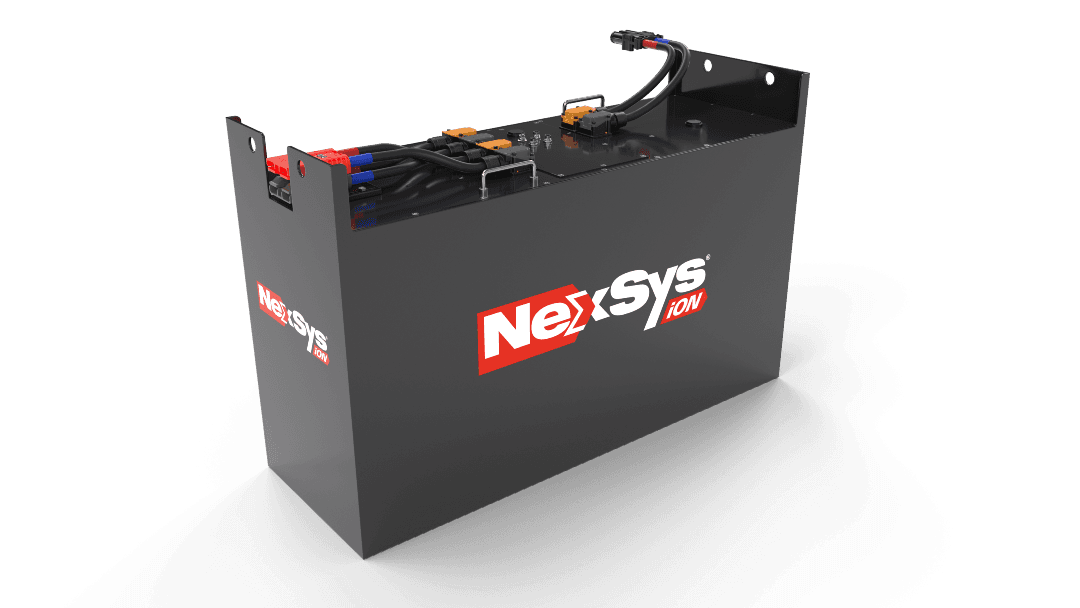
EnerSys has introduced the next generation of its NexSys iON lithium-ion batteries for heavy-duty material handling operations, with a focus on applications requiring continuous, multi-shift use.
The new NexSys iON platform is designed for 24/7 operations and supports opportunity charging of up to 300% nominal energy throughput per day, according to EnerSys. The company said the batteries are intended for warehouse and distribution center applications operating up to three shifts per day.
“NexSys iON lithium-ion batteries represent the next evolution of lithium power for material handling,” said Martin Walsh, senior director global battery product management MP at EnerSys. “With unmatched performance, flexible integration, and faster ROI, the next generation NexSys iON allows more customers to confidently transition to lithium, without compromise.”
The batteries use a modular design intended to provide high energy content while fitting existing battery trays and supporting a range of forklift models. EnerSys said tailored energy configurations are intended to support fleet integration, while the modular construction allows the batteries to be dismantled at the end of their service life to support recyclability.
The next-generation NexSys iON batteries also incorporate EnerSys' in-house battery management system and safety features. According to the company, each battery is tested and certified to meet global standards for performance and safety.
EnerSys said the batteries are designed to increase productivity and reduce total cost of ownership, with the goal of providing faster payback across a broader range of material handling equipment fleets.
The new batteries expand the NexSys family, which also includes NexSys TPPL batteries and NexSys traditional, outdoor and wireless chargers for various applications.
EnerSys, based in Reading, Pennsylvania, provides stored energy solutions for industrial, infrastructure, and defense applications. Its products include batteries, chargers, and other power equipment used in areas including material handling, transportation, communications networks, data centers, energy infrastructure, aerospace, and defense.
Aug 04, 2026

Lift & Access is part of the Catalyst Communications Network publication family.