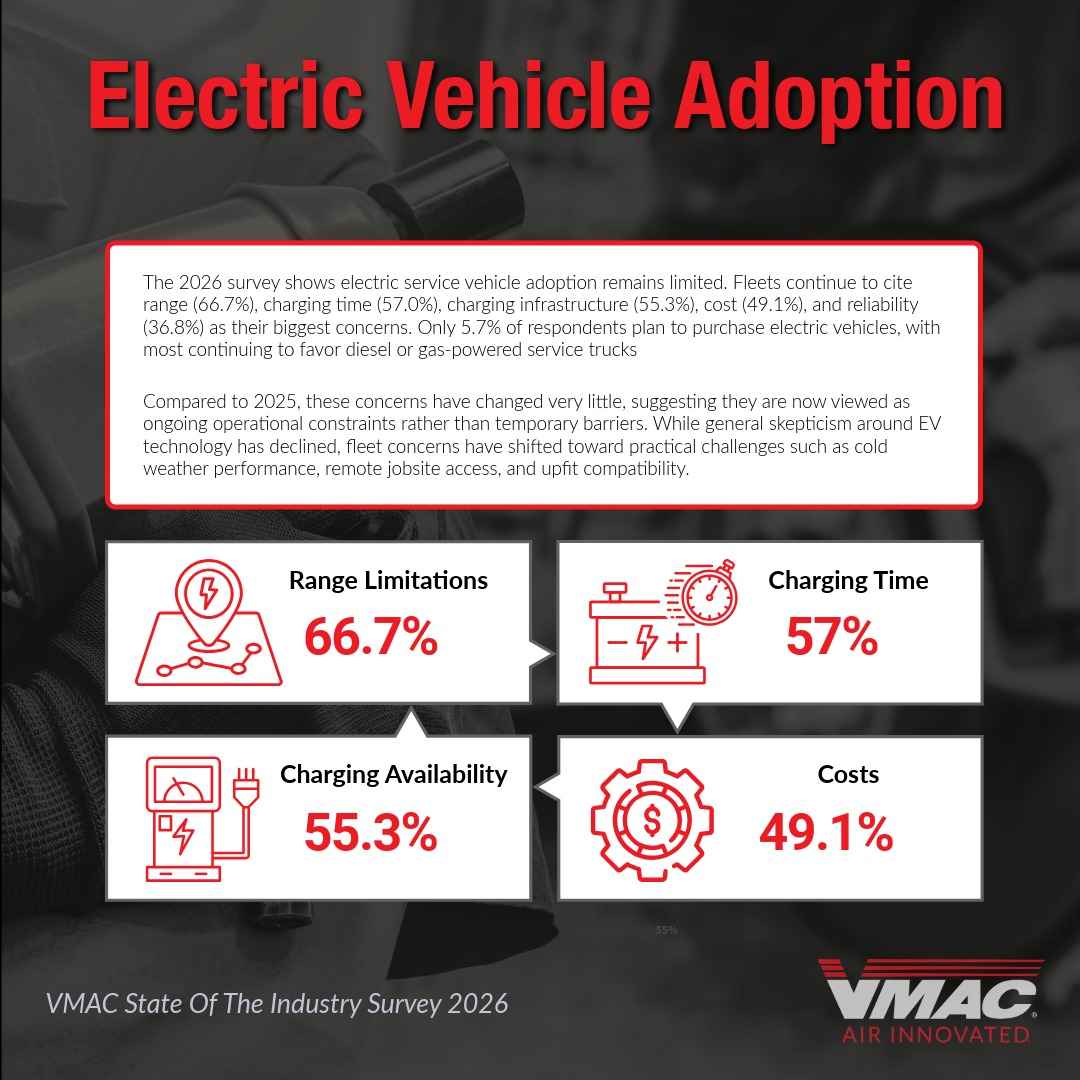
Electric vehicle adoption intentions among service fleet professionals have changed little over the past year, according to the 2026 State of the Mobile Compressed Air Industry Report.
Under 6% of respondents said they plan to purchase electric vehicles. The report found that practical operating requirements remain a factor in fleet purchasing decisions, particularly for vehicles used in demanding or remote service environments.
Range limitations were the leading concern, cited by 67% of respondents. Charging time was cited by 57%, followed by charging infrastructure availability at 55% and vehicle cost at 49%. Reliability was identified as a concern by 37% of respondents.
Other concerns included cold-weather performance, remote jobsite access, and vehicle upfit compatibility.
The report emphasizes evaluating emerging vehicle technologies against actual duty cycles rather than adoption targets alone. Service fleets may travel to remote locations, carry specialized equipment, and rely on onboard power systems to complete work in the field.
“Electrification will continue to be an important part of the commercial vehicle industry, but adoption has to align with the operational realities of the work being performed,” said Mike Pettigrew, VMAC marketing manager. “For service fleets, the decision is ultimately about whether a vehicle can reliably support the full workday, including driving to remote jobsites and powering auxiliary equipment and the tools technicians depend on. The industry will move toward electrification as the technology and supporting infrastructure demonstrate they can consistently meet those requirements.”
The findings were largely unchanged from 2025, indicating that the concerns identified by respondents continue to affect electric service vehicle adoption.
More than 76% of respondents operate service trucks and vans, which remain central to mobile operations. Fleet operators continue to prioritize proven equipment and vehicle configurations while balancing productivity, reliability, operating costs, and long-term asset utilization.
Most fleets continue to prioritize diesel and gasoline vehicles for service applications, despite continued interest in electrification.
According to the report, the findings point to the importance of developing vehicle technologies that can support both established platforms and the industry's longer-term transition toward electrification.
Sep 17, 2026

Lift & Access is part of the Catalyst Communications Network publication family.