At the 2026 EUFMC, Peter Waldrab, vice president safety and technical training at LG&E and KU, delivered a keynote address that was as much a call to action as it was a diagnosis of an industry at an inflection point.
In “From the Grid to the Garage: How Industry Disruption Is Reshaping Utility Fleets,” Waldrab outlined a convergence of forces, including load growth, weather volatility, regulatory pressure, workforce transformation and advancing technology, that are redefining what utility fleets must do and how they must evolve.
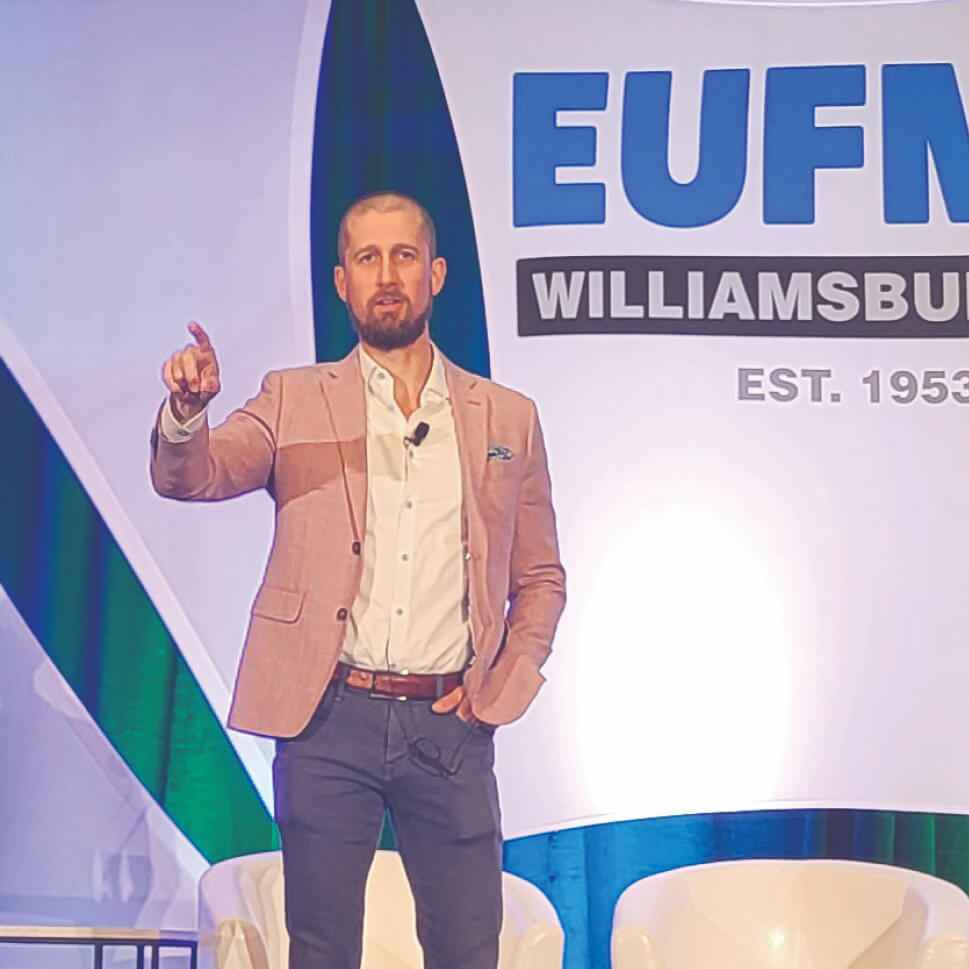
“The grid that powers the future gets built and maintained by workers in vehicles you spec, procure and keep running,” he told attendees, putting fleet professionals squarely at the center of the industry’s transformation.
What followed was a structured look at the trends shaping utilities and five clear implications for their fleet strategy.
Historic Load Growth: After decades of flat or declining demand, load growth has come roaring back. Waldrab described it as “the biggest expansion that we’ve seen in our industry since the post–World War II industrial era.”
Drivers include electrification and, most significantly, the explosive expansion of data centers — hyperscale facilities with loads equivalent to entire cities that are now being planned and built on timelines measured in months.
The result is a surge in grid investment that must move through utility fleets and for fleet managers, this isn’t abstract. It translates into increased demand for equipment, and unprecedented pressure to maintain their fleets.
Weather Volatility: A risk that fleets face, Waldrab pointed to a dramatic rise in billion-dollar weather events, from roughly six annually decades ago to 28 in 2023. And the storms are not only more severe, he noted, but also more unpredictable.
These events now require nationwide response mobilizations, with crews and equipment traveling across regions to restore power, a shift that is fundamentally changing how fleets must operate.
“More resilience, greater mobility and endurance are no longer optional,” Waldrab said. “These are now baseline requirements.”
Affordability and Regulation: Utilities are navigating a complex regulatory environment shaped by rising energy costs and heightened public scrutiny. Electricity prices have climbed significantly, placing affordability at the center of policy debates.
“Affordability is a big deal for our customers, our regulators and our investors,” Waldrab emphasized. “The result is intensified scrutiny of every capital and operating decision.”
As a result, fleet investments, once viewed primarily through operational lenses, must now be justified with financial rigor and transparency, Waldrab added.
Workforce Transformation: The utility workforce is undergoing a generational shift. Nearly half of line workers are expected to retire within the next decade, leaving behind a younger, less experienced workforce performing one of the most dangerous jobs in America.
“This is the youngest workforce that we’ve had in a generation,” Waldrab said. “Safety, training and knowledge transfer are more critical than ever, and fleets are central to all three.”
Technology Expands: From telematics and AI-driven safety systems to drones and robotics, technology is reshaping field operations. Importantly, Waldrab stressed that these innovations don’t replace fleets, they expand them.
“Drones and other technologies don’t replace your fleet; they become part of it,” Waldrab said. “Trucks are evolving into mobile platforms for new tools and capabilities. They are increasingly an integrated system of equip-ment, data and connectivity.”
Strategic Implications
Against this backdrop, Waldrab outlined five implications that should guide every utility fleet’s strategy. Each reflects a rethinking of what fleet management means.
1. Lengthen the Planning Horizon
Fleet planning on relatively short cycles no longer works. “Infrastructure build-out demands fleet capacity decisions that look ten years out, not three,” Waldrab related. “With grid expansion accelerating and supply chains under strain, fleet managers must anticipate future needs well in advance. Proactive planning means aligning fleet strategies with long-term utility investments.”
2. Standardize as a Strategic Asset
Standardization is imperative. “Mutual aid, training, parts and telematics integration all get easier and safer with a consistent fleet,” Waldrab said. “Standardization also simplifies maintenance, parts inventory and data integration.”
3. Pair Technology with Change Management
Technology alone doesn’t deliver value. “New tech deployed without training and support becomes a liability,” Waldrab warned. “Fleet leaders must act as change agents, guiding their organizations through adoption. This includes building training programs, fostering acceptance and ensuring that technology is integrated into daily workflows.”
4. Speak Total Cost of Ownership (TCO) Fluently
Financial fluency is essential. “The traditional view of capital expenditures versus operating expenses is no longer sufficient,” Waldrab advised. “Regulators and executives expect detailed business cases that consider full lifecycle costs, including maintenance, fuel, reliability and residual value. “Fleet professionals who can effectively articulate TCO will be better positioned to secure funding and influence decision-making.”
5. Spec for Safety
Safety is not just best practice. “With younger, less-experienced crews doing more work in harder conditions, your fleet specs are safety decisions,” Waldrab stated. “Every specification choice can impact worker safety. Technologies on connected vehicles can provide real-time coaching, helping prevent incidents before they occur and vehicle design can help reduce crew fatigue.”
New Role
Beyond specific strategies, Waldrab underscored a broader shift in the role of utility fleet managers who are no longer confined to procurement and maintenance.
“Fleet leaders are now central to utility strategy,” Waldrab said. “They sit at the intersection of operations, finance, technology, and safety. With lead times for critical equipment increasing dramatically, and the scale of upcoming projects, fleet management requires closer collaboration to ensure capacity keeps pace with demands.
“This expanded role requires strategic planning, financial analysis, change management and technological literacy,” Waldrab continued. “It also demands a willingness to challenge assumptions and rethink traditional approaches.”
For fleet professionals, the path forward is clear: understand the trends, embrace the implications, and build vehicle, equipment and maintenance strategies that are resilient, adaptable and forward-looking.
Jul 20, 2026


Lift & Access is part of the Catalyst Communications Network publication family.