
Every March is National Ladder Safety Month, sponsored by the American Ladder Institute (ALI), the ANSI-approved developer of ladder safety standards. Safety isn’t seasonal, so ALI promotes safe ladder use year-round.
On construction sites — across every trade — ladders are everywhere. They’re the quickest way to get from one height to another, and that’s exactly why they deserve respect.
Familiarity breeds shortcuts. When ladder safety starts to feel like déjà vu, risk goes up. Ladders are used so often they can stop being treated like the access equipment they are. If you can see a ladder and climb it, it’s tempting to think that’s the whole story. Pros know better.
Ladders are not inherently dangerous. Misuse, poor setup and lack of awareness create the risk. Real ladder safety starts before the first rung: selection, inspection and maintenance — then setup, use and finally transport and storage.
Choosing the right ladder
One of the most common mistakes is using the wrong ladder for the job. Start with the work environment. If you’re near electricity, skip metal/aluminum and use fiberglass. Then match the ladder to the task: a self-supporting stepladder or a non-self-supporting single/extension ladder.
Next, check where the ladder will sit. Is the ground firm and level? Any debris, slopes or obstructions in the climbing path?
Finally, choose the right size. Too short invites overreaching; too tall invites unsafe positioning. With stepladders, never stand on the top step, top cap or straddle the top. With extension ladders, don’t use the top three rungs.
Remember: the advertised height is the full length of the rails — not your usable working height. Setup angle, no-stand zones and (for extension ladders) section overlap all reduce usable height. An extension ladder that extends more than 3 feet beyond the upper support can act like a lever and may cause the base to slide.
Also check the duty rating — the total weight the ladder is designed to support – and be sure not to exceed it. A taller ladder does not mean a higher weight rating.
Inspection and maintenance
Used properly, ladders are reliable tools. But any work at height raises the stakes, so inspection and maintenance aren’t optional.
Before each use, inspect the ladder: locks and spreader braces, steps/rungs, rails, connections/fasteners, feet and shoes and any accessories.
Pay close attention to foot pads. Worn or missing pads can lead to instability and slip-out. If you find a hazard, contact the manufacturer for replacement parts. Use only manufacturer-approved components and follow their instructions. Never “field-fix” a ladder with unapproved parts or methods. If replacement parts aren’t available, destroy the ladder.
Check labels, too. If safety labels are missing, loose or unreadable, the instruction and warning information the manufacturer has provided can’t be read and followed. This can result in misuse that leads to accidents. Confirm the duty rating label is present and legible to prevent overloading.
To extend ladder life, keep it clean and lubricate moving parts per the manufacturer’s instructions.
Ladder setup
Set ladders on a firm, level surface. Use accessories (levelers, stabilizers, V-rungs, etc.) for irregular conditions. When possible, secure the ladder by tying off, blocking, bracing or using an assistant. Never move or reposition a ladder while it’s occupied.
Safe usage
Climb slowly and deliberately. Maintain three points of contact. Face the ladder and keep both hands available — use a tool belt, towline or an assistant to raise tools and materials.
While working, stay centered and controlled. Keep your belt buckle (center of your body) between the side rails. Don’t overreach or lean — move the ladder instead. Avoid sudden movements and wear clean, slip-resistant work shoes.
And keep the no-go zones clear: for stepladders, never stand on the top step/top cap or straddle the top. For single/extension ladders, don’t stand on the top three rungs.
Ladder transport and storage
Properly secure your ladder during transport to avoid excessive wear and loading at the vehicle support points. Store ladders where they are protected from unsafe materials, impact or corrosion damage.
Do not use a ladder as a storage shelf. 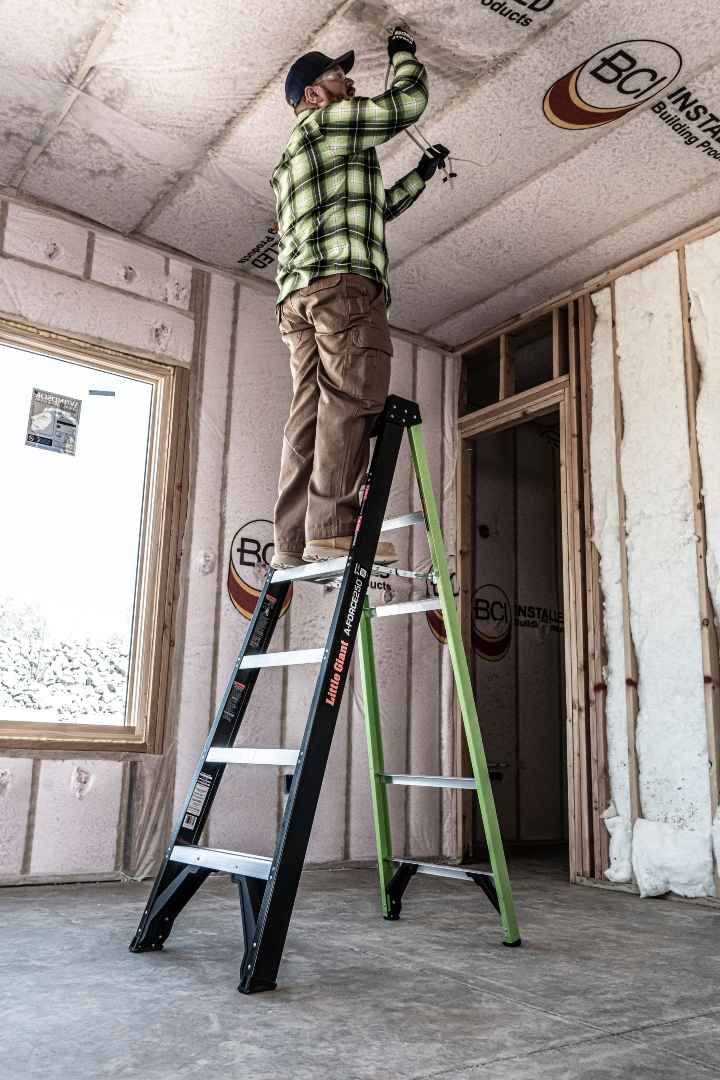
Consistency equals safety
Safe ladder use comes down to consistency: choose the right ladder, inspect it, set it correctly, climb with control and store it the right way. Contractors can reduce risk by reinforcing these basics with regular, specific training. Workers should treat ladders like the precision access tools they are — built to be used in specific ways.
The American Ladder Institute (ALI) maintains online safety resources that professionals can incorporate into their own safety initiatives. Laddersafetymonth.com maintains flyers, videos, articles, webinars, podcast interviews, safety checklists and more. From here, users can also access ALI’s complete ladder safety training. Curriculum is updated regularly; the association has recently added new content for both stepladders and extension ladders.
Ladder Safety Month is an annual reminder — but ladder safety isn’t annual. It’s every job, every setup, every climb. The next time someone reaches for a ladder, it should trigger the same mindset as any other tool on site: right equipment, right condition, right method — every time.
About the Author: Mike VanBree is director of product safety and engineering at Louisville Ladder Inc. and current president of the American Ladder Institute (ALI), a nonprofit trade association dedicated to promoting ladder safety.
Mar 09, 2026

Lift & Access is part of the Catalyst Communications Network publication family.