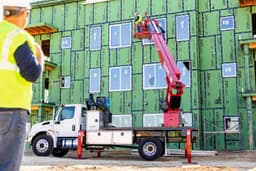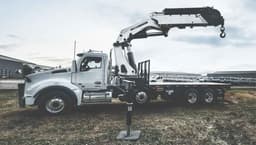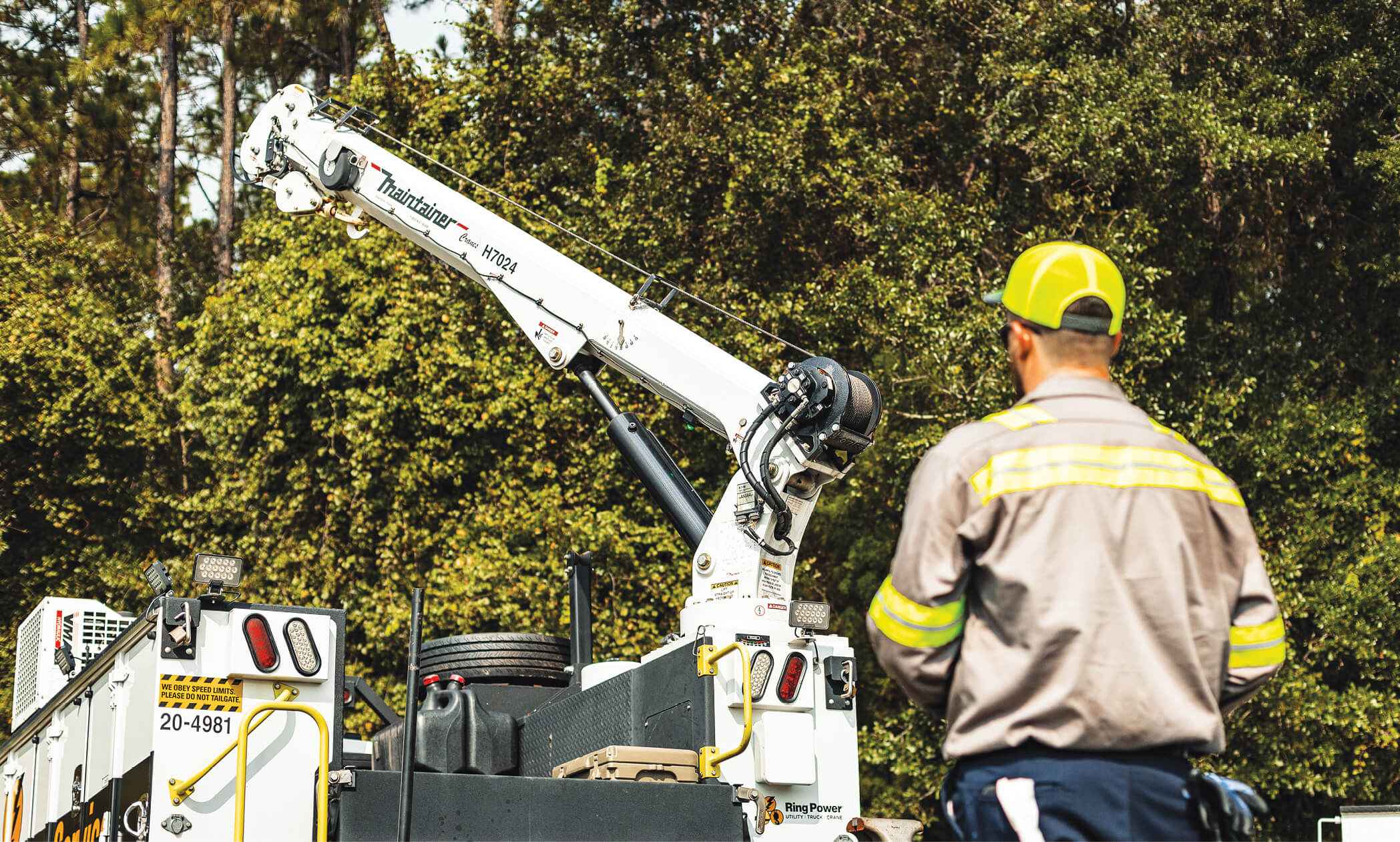
Service cranes are a critical component of our utility and construction fleet maintenance operations,” said Jonathan Long, vice president, product lifecycle at Ring Power Utility | Truck | Crane. “We’ve been using service cranes for over 60 years to ensure uptime and reliability for our customers. Today, they form the backbone of our mobile service strategy by allowing our technicians to complete repairs safely and efficiently at the jobsite.
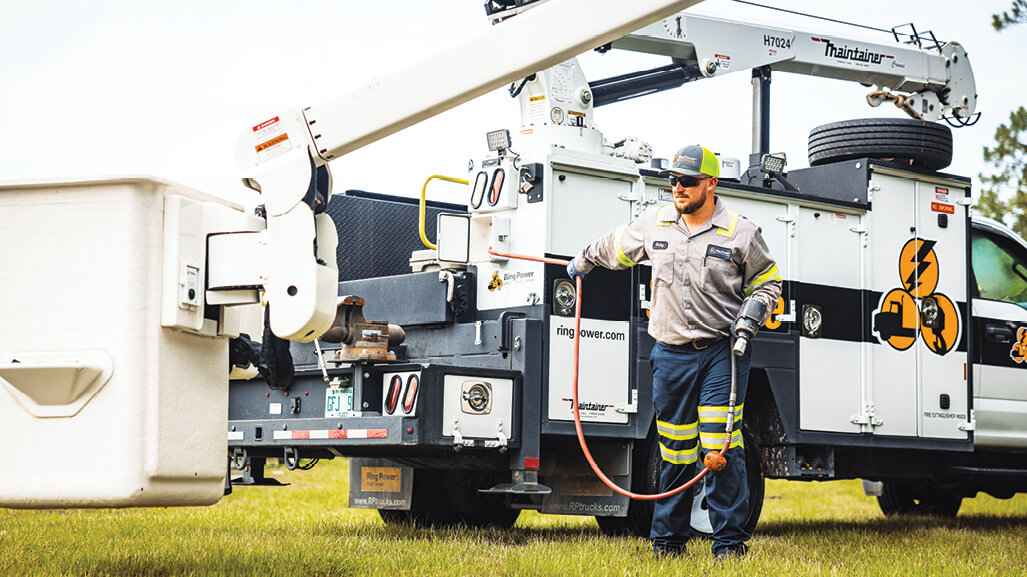
“Our service trucks outfitted with cranes are equipped to resolve the majority of issues in the field,” Long continued. “These solutions don’t just save time they also build trust. When we dispatch a technician, our goal is to arrive with the tools, equipment and parts needed. That responsiveness makes us an invaluable partner, especially in storm response scenarios where uptime is mission critical.”
“Service cranes give utility fleets the flexibility to shift more maintenance and repair work into the field,” said Dan DeAces, national sales manager at Summit Truck Equipment. “By reducing reliance on centralized shops, fleets can respond faster, cover larger territories and complete more jobs per day. As mobile service operations grow, service cranes support that expansion by increasing job capability, improving technician efficiency and helping fleets do more with the equipment and crews they already have.”
For Clint Weckwerth, product manager for service cranes and crane bodies at PALFINGER North America, having the capability on the truck to pick and place larger items has benefits in time savings and efficiency, as well as in reducing technician fatigue. “Service cranes are problem solvers,” he said. “They can handle multiple functions and be quickly and easily reconfigured, and they operate in all conditions, across tough terrain and usually on a tight schedule.”
“The value of a service crane to utility fleet maintenance and repair operations is rooted in its ability to drive efficiency and expand operational capabilities,” said John Field, sr. sales manager at Iowa Mold Tooling (IMT). “To truly facilitate growth in mobile service operations, fleets need equipment like service cranes that prioritize critical performance metrics, including safety, weight, capacity and length.”
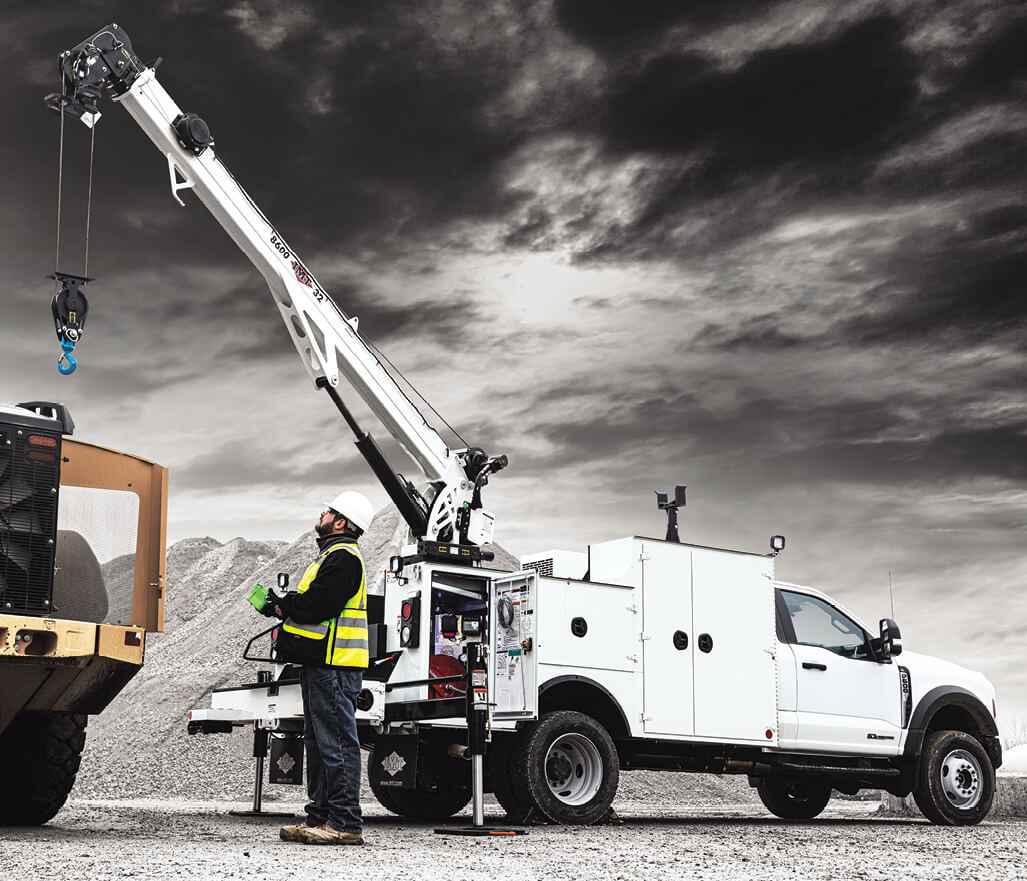
Tim Worman, director of product management and inside sales at Stellar noted that the use of a service crane allows technicians to be more efficient when doing field service as it provides a valuable tool for lifting. “The service crane can be used for many mobile repair applications, from large construction to utility equipment, and everything in between,” he said. “It provides endless possibilities in the mobile maintenance arena.”
Range of Choices
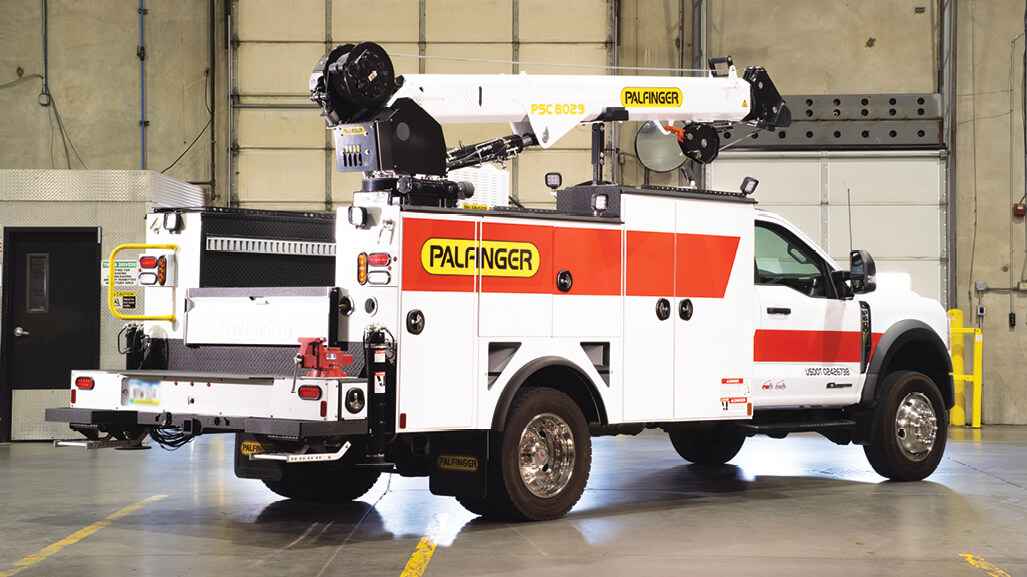
The latest updates to the PALFINGER service crane lineup include the PSC 8029 full hydraulic model with a capacity of 8,000 pounds. The cranes feature 29 feet of reach and have an updated control system using PALtronic PAL180 and improved radio remote crane control with Scanreco RRC. Also included is a Load Moment Indication (LMI) measurement system with updated lift cylinder plumbing, sensor packages, angle measurement capabilities with a rotary encoder integrated with a main boom pin, and enhanced reach measurement with a linear extension sensor.
The new IMT Series 5 telescopic crane line utilizes high-strength steel and the manufacturer’s Penta Boom geometry to optimize the crane’s weight and maximize available payload capacity. This allows utility trucks to carry the necessary inventory for complex repairs without sacrificing lifting strength. The cranes also feature extended boom lengths up to 32 feet.
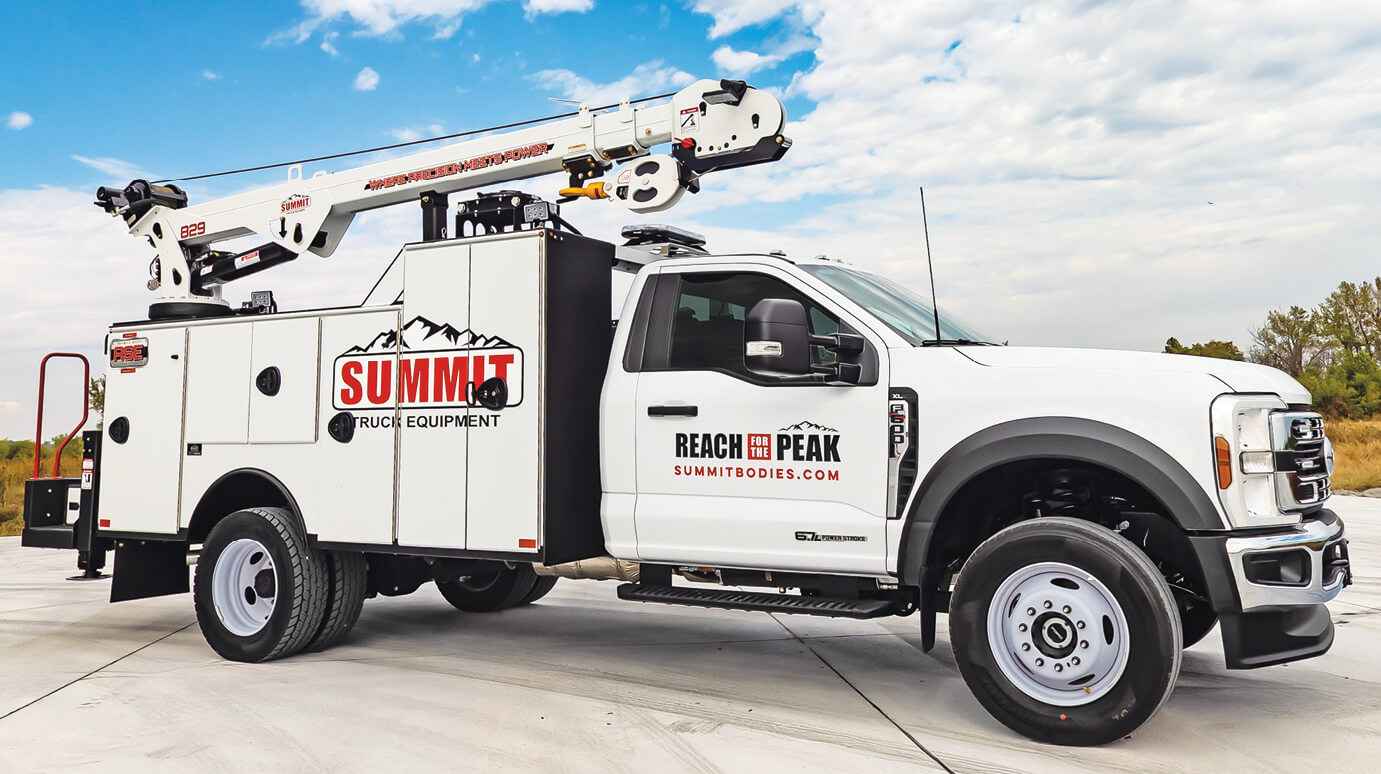
The Summit 829 hydraulic crane available for purchase beginning in early 2026 has 29 feet of maximum horizontal reach and an 8,000-pound maximum lifting capacity. Key innovations include a fully proportional control valve that enables seamless movement of all functions simultaneously, a redesigned rotational assembly that weighs over 100 pounds less than its predecessors and allows for continuous rotation and a relocated winch. On the crane as well there is an updated ASE Phase 5 control system that offers enhanced customization, ease of use and access to diagnostic capabilities encompassing all devices within the truck’s electrical environment.
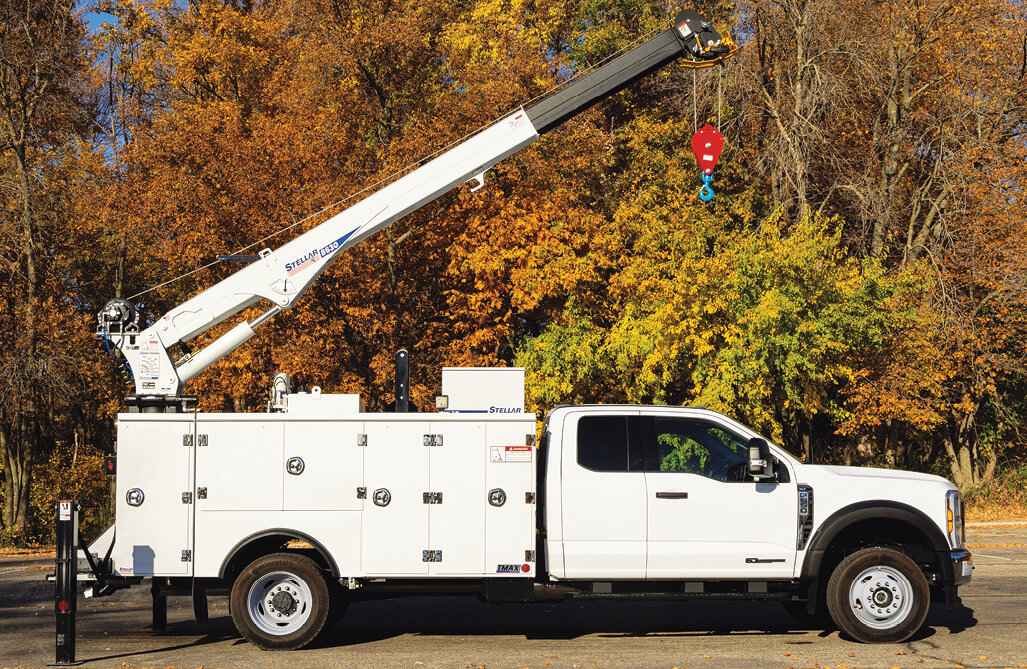
Stellar hydraulic service truck cranes have lifting capacities from 7,500 to 14,000 pounds. The cranes feature an octagonal boom and compact boom tips for maintaining strength while reducing weight and making access to tight spaces easier, a planetary winch with a hydraulic or mechanical brake system, and full hydraulic extension for -10 degrees to +80 degrees articulation. Also available are radio remote control and the Stellar CDTpro Control System with Range Finder technology.
Supporting Onsite Work
“From an engineering standpoint, service cranes allow mobile service operations to handle more complex work without adding additional equipment or vehicles,” said Christian Glascock, product development engineer at Summit Truck Bodies. “When a crane is lighter, stronger and easier to control, it expands what technicians can safely do in the field. That translates to greater efficiency, shorter setup times and the ability for a single truck to support a wider range of maintenance and repair work onsite.”
Jan 18, 2026

Lift & Access is part of the Catalyst Communications Network publication family.