We live in a world where technology permeates nearly everything we do. The speed with which new technologies are applied, even in the construction industry, might make it easy to lose sight of why. The “why” is to help customers become more productive, and to get the most value out of their investment.
While it’s true that industry standards can be the impetus for implementation of new technology, it’s not the only or primary driver. A pipeline of quality improvements, options and new features is also essential. And the priority, and sometimes the inspiration, for these projects are end users and rental partners.
Driving Innovation
While Genie anticipates what the industry will need as standards evolve, customer input also plays a role in innovation and listening to the “Voice of the Customer” is an intentional process. Our rental partners will hear about trends or challenges from contractors and end users long before we will. Receiving that input from them is incredibly valuable in developing equipment, options and accessories that meet their needs not only today, but in the future.
Two new options, being introduced this fall, are prime examples. Lift Guard Lanyard Alert is a secondary guarding system designed to encourage boom lift operators to utilize established platform anchor points. Similar to seatbelt warning systems in cars, Lanyard Alert provides visual and audible warnings if the operators’ fall system lanyard is not attached to the anchor point of the platform. An advanced version prevents machine functions if the lanyard is not attached to the anchor point.
“In some markets, many contractors are requiring a lanyard warning device in order to bring boom lifts onto jobsites,” said Dominik Damm, Genie director of product management, Booms Portfolio. “We expect this requirement to globalize, with the North American markets requiring it next.”
The second new option was influenced by the explosive growth in construction of mega warehouses and data centers. The scope and schedules of these projects means multiple trades are working simultaneously.
“Employers are increasingly focused on collision and entrapment avoidance, as well as dropped object protection,” said Bryan Williams, Genie product manager. “Providing information to the people working on or around lifts helps increase awareness of their surroundings, potentially preventing these types of incidents.”
The solution came from customers familiar with warehousing operations where visual perimeter lights are used on industrial forklifts. On a busy jobsite where there are overlapping equipment backup alarms, workers can become desensitized to their surroundings. Adding visual cues increases awareness of the equipment for people working around it, and it gives the operator additional information about adjacent structures in a tight workspace.
Adapting to Standards
Recently, Genie announced new controls for our GS scissor lifts. The timing of this was influenced by ISO 21455, a new international standard. One objective of International Organization for Standardization (ISO) 21455 is to standardize the direction of machine movement so that it correlates to the direction of the controller movement.
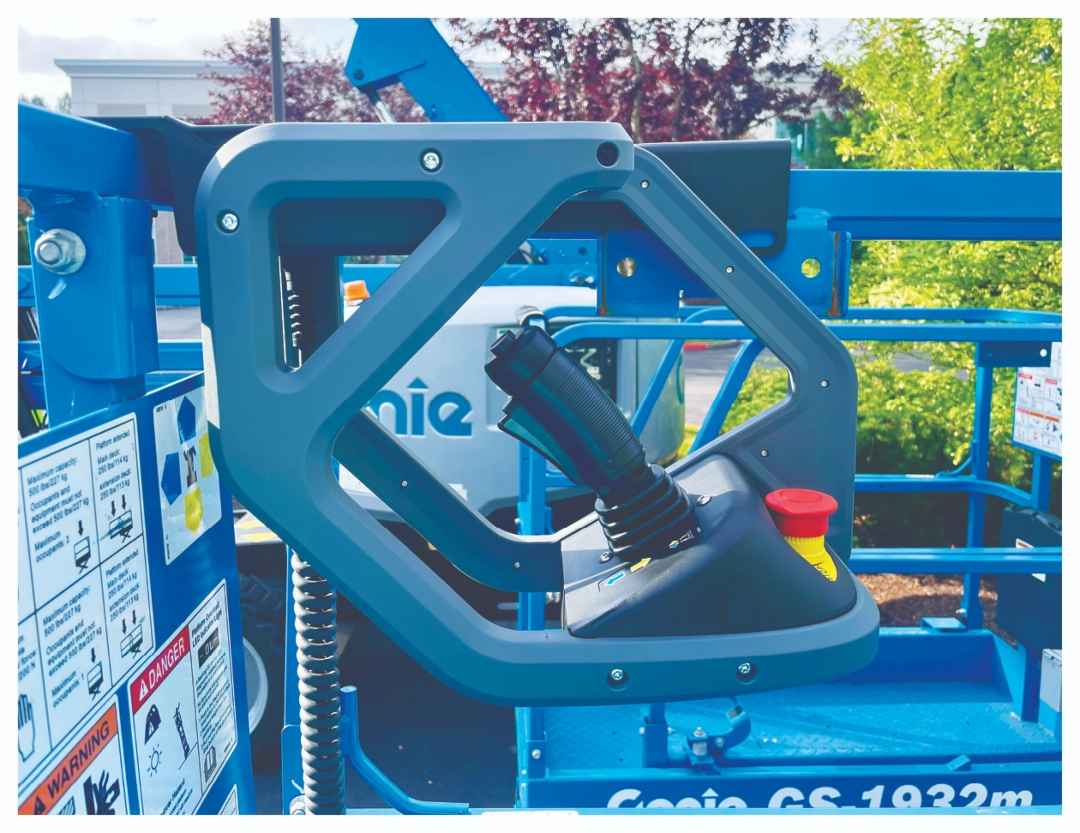
“Anticipating this change, Genie considered what customers need from us now and what they’ll need in the future,” explained Jason Berry, Genie director of product safety. “We decided to incorporate the new control design requirements across the entirety of the GS scissor lift product line, which launched in November 2024, for most regions across the globe.”
Maximizing Fleet Efficiency
Technology is also targeted at helping rental partners get the most utilization out of their investment. Telematics is central to this. For example, Genie Lift Connect streams data from the machine while it is operating.
“This type of ‘heartbeat data’ makes it possible to perform deep analytics, systematically identify trends and will help deliver proactive recommendations for maintenance to maximize uptime through equipment availability,” said Dana Peters, Genie global director, Digital Services.
Fleet owners have a growing interest in the ability to integrate individual telematics data into a larger ecosystem, where they get more than just alerts about data. Increasingly, contractors also want this data. As construction timelines shrink, contractors are more focused on efficiencies and time management. They want to work with tool and rental suppliers who can help them achieve this by having the most productive equipment for the job.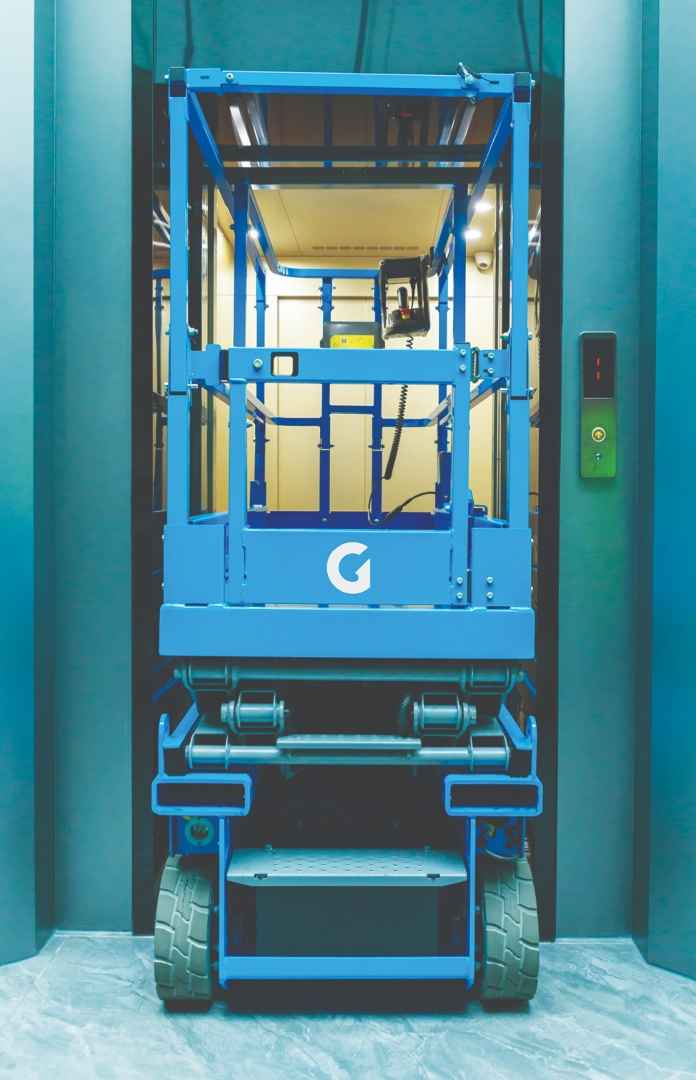
Small Changes-Big Benefits
Sometimes, it’s the little changes that make the biggest difference in return on investment for rental companies. Genie’s next-gen scissor lift products feature an electric drive, which dramatically reduces hydraulics in the machine. Less hydraulics means that rental companies don’t have to carry parts inventory for spill containment pads, they don’t have to send labor out to the field to install the pads and end users don’t have to handle clean up.
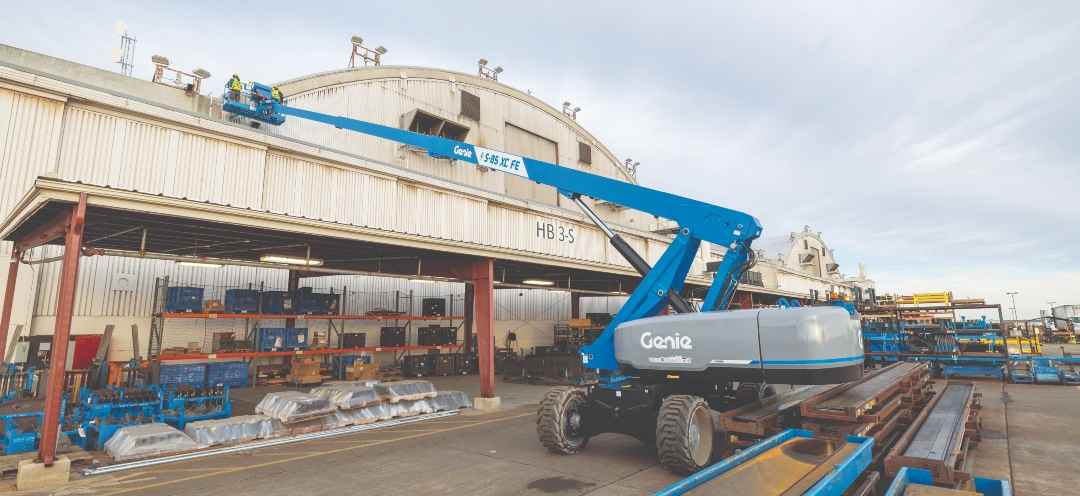
The new S-85 XC FE and E hybrid and electric telescopic boom lifts are another great example of how little improvements can add up. These lifts, which were introduced in January, feature more than 80 quality improvements that reduce maintenance, resulting in a 6% reduction in ownership costs for FE hybrid machines and 15% for electric
E machines.
In these models, the cable tracks have been better organized, improving both serviceability and longevity. Durable separators are now found every second track, spacers separate hoses and cables and hose and cable wear has been tested to prevent overlapping and rubbing.
Electrification, reduced hydraulics and new control systems will continue to be priorities, as each of these contribute to what customers are asking for — equipment that’s easier and less expensive to maintain, has less frequent downtime and retains its value.
Genie’s take on new tech is that improvements must be right for the rental customer and the user. That means putting ourselves in our customers’ shoes so we can truly identify ways to improve everyday operation and lower the true cost of ownership.

Lift & Access is part of the Catalyst Communications Network publication family.