While lifting and crane products for different applications and market segments is the primary business at PALFINGER, noted Chris Shallenberg, national sales manager, Aerial Work Platforms, PALFINGER North America, it’s about much more.
“What manufacturers really provide are solutions,” the 17-year industry veteran quickly added. “While we meet equipment needs, customers have to be able to rely on suppliers to address ongoing and new challenges.”

Across different markets, Shallenberg related, customer needs change, and economic and political factors impact their businesses and operations. “Today, one of the biggest challenges in all industries for manufacturers of lifting equipment and our customers is uncertainty,” he said. “The unknowns include the impact tariffs could have on raw materials and the funding that will be available for capital projects, creating a dynamic environment when it comes to equipment manufacturing and purchasing.
“Customers and manufacturers can be key resources for each other,” Shallenberg continued. “Working through scenarios and considerations together, including spending time in the field, is the kind of continual interaction that leads to better equipment designs and support. Learning how and when our customers will be starting new projects and planning purchases puts us in a better position to have the right equipment ready when it’s needed.”
Lessons Learned
According to Shallenberg, there were also lessons learned during the supply chain crunch that was felt across the industry a few years ago.
For example, while longer lead times for new equipment made it more challenging to plan purchases and replacements, chassis and equipment manufacturers and customers are now planning more successfully.
“We’ve also invested in maintaining a larger inventory of vehicles for immediate availability,” Shallenberg said, “and we facilitate more efficient planning by developing versatile equipment that can be used in different market segments. Starting with chassis that support a mix of applications we can provide bodies and equipment for power, sign, tree and telecom companies that may be doing energized line or storm restoration work or stringing fiber optic cable for 5G and broadband initiatives.”
Relationships between suppliers are also critical, Shallenberg noted. “Collaboration between chassis, body, aerial and tool and equipment suppliers is essential for successful design, manufacturing, spec’ing and upfitting,” he said.
“The result is a purpose driven machine for a specific application,” Shallenberg stated. “Together, suppliers should systematically address equipment needs. For example, use the aerial’s requirements as a starting point and then move on to body configuration, storage and style, and then choose a chassis that works for the required payload.”
Expanding Lineup
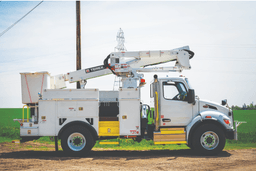
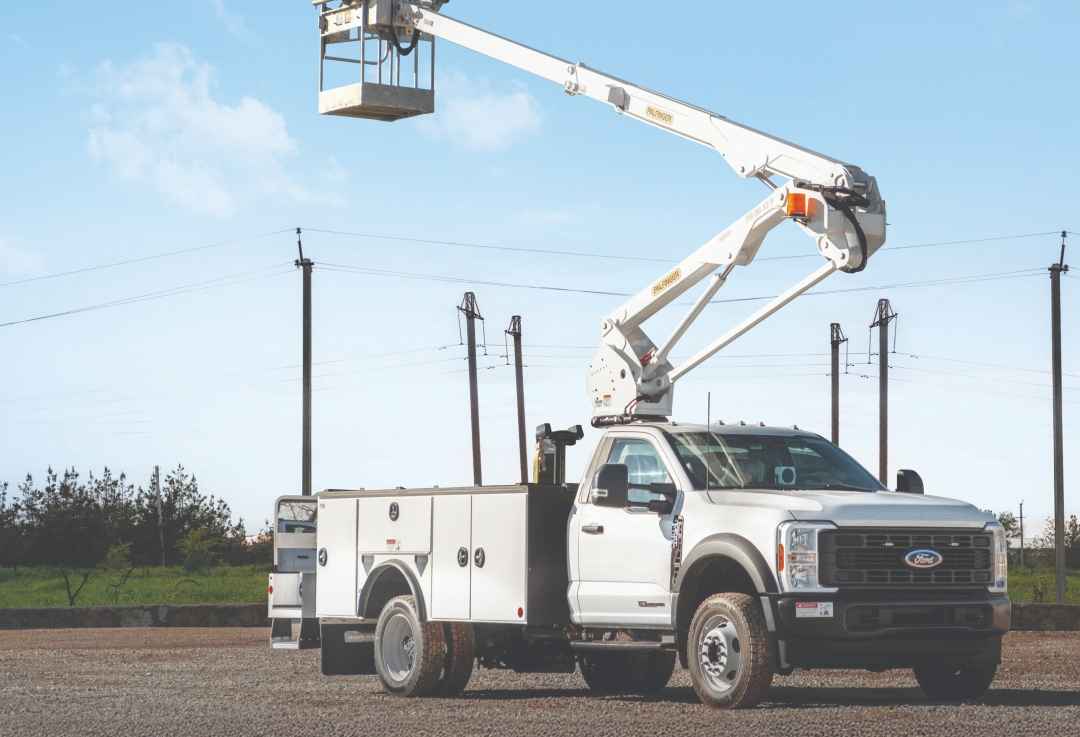
As an example, Shallenberg pointed to the expanding bucket truck lineup at PALFINGER. Earlier this year at Work Truck Week, the company introduced the PB 38 AT P cable placer, designed for rising installation demands in the telecommunications industry.
The new model for stringing and placing telecom cable allows operators to use the boom while the vehicle is in motion, reducing installation time for overhead lines. The PB 38 AT P has a 38-foot platform with flexible stowage for access from the tail shelf or to maximize cargo area, 43 feet of working height and 27 feet of side reach.
Looking ahead, PALFINGER has plans to introduce other new models. For example, development is underway on insulated designs with higher capacities at maximum side reach for lifting transformers from any boom position.
Shallenberg also pointed to growing interest in fielding smaller chassis that are more maneuverable and less expensive, without sacrificing safety, function or comfort. Another consideration that comes up more frequently involves comparing the weight savings available with aluminum or composite bodies with the proven long-term durability and corrosion resistance of more traditional steel designs.
Steady Focus
“Across the board, the focus is always on safety, ease of operation and reliability,” Shallenberg said. “With tried-and-true designs and innovative technologies we can focus on the fundamentals and build better products. We’re especially interested in the latest safety monitoring features being developed in our industry.
“These vehicles and equipment have to be ready to go at all times,” Shallenberg continued. “At the same time, they are put to work in demanding environments. In both cases, that means service and support should be at the top of every manufacturer’s list.”
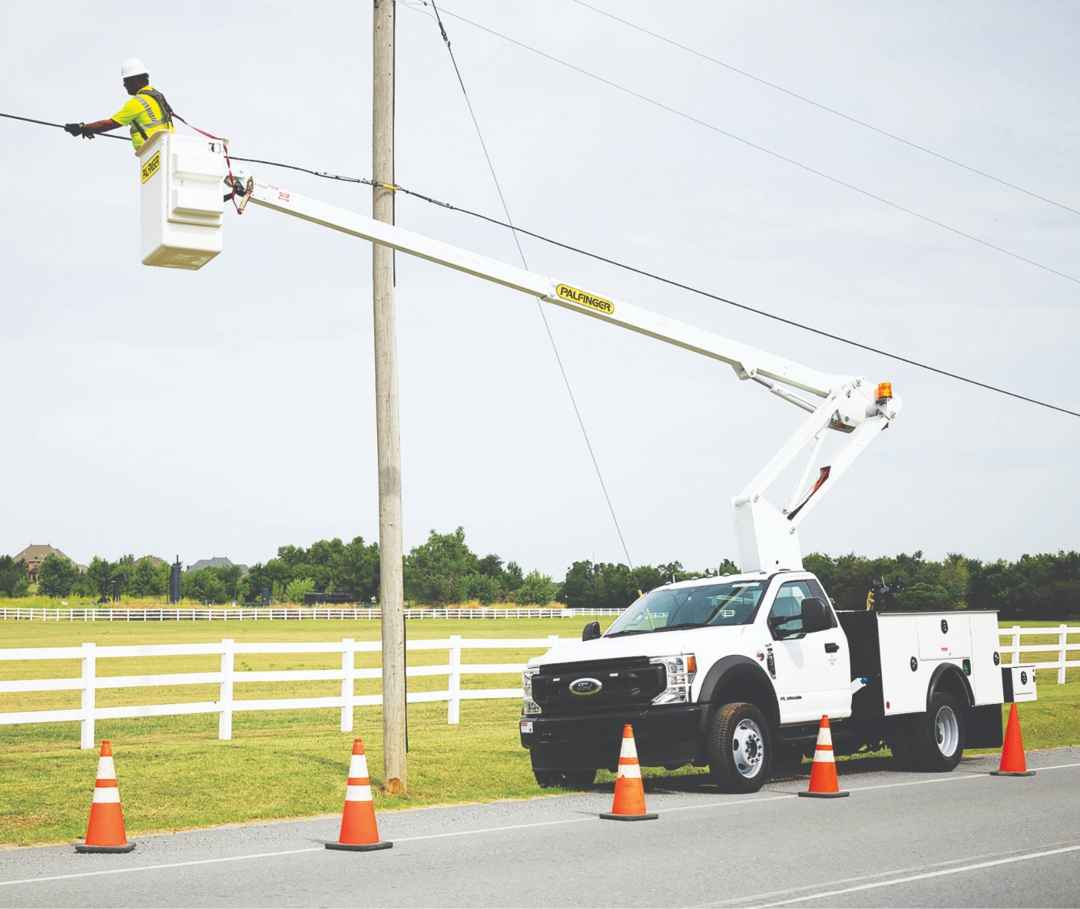
For PALFINGER, Shallenberg went on to relate that those needs have led to a focus on parts availability and quick turnaround times for service and repairs. Currently, PALFINGER USA, a dealership owned by PALFINGER, has 13 locations and more than 100 mobile service technicians. PALFINGER North America is also steadily adding authorized service partners for their bucket truck product line.
“The goal is to have service consistency, whether it’s the experience at one of our dealers, on a jobsite or through an outside provider who meets our criteria,” Shallenberg said. “We’re also working to improve self-service capabilities for fleets with modular components and better access points. There’s no point in selling a vehicle if you can’t service it effectively.”
For Shallenberg, it’s all about staying committed to meeting customer needs and helping them address challenges by designing and supporting a range of lifting products backed by strong service and support programs. “A manufacturer who recognizes the importance and pivotal nature of providing an overall excellent experience,” he said, “will have long time customers who continue to rely on them for effective solutions.”
Aug 05, 2025


Lift & Access is part of the Catalyst Communications Network publication family.