AI-driven data center construction has moved beyond being a high-growth niche. It has become one of the most influential forces shaping how large industrial projects are designed, permitted, built and operated. While much of the attention has focused on power demand and grid capacity, another shift is happening closer to the ground and it’s one that directly affects utilities, contractors and equipment operators.
Developers, communities and technology companies are no longer asking only how much energy a facility will consume once it is operational. They are asking how it is built, what materials flow through the site, how waste is handled and what the construction footprint looks like day to day. For lifting professionals, this scrutiny is translating into new expectations, new data requirements and opportunities to operate more efficiently.
Historically, construction sustainability discussions centered on end-of-life outcomes or high-level diversion percentages reported after a project wrapped. AI data centers are changing that model. But developers now face community pressure, investor expectations and internal mandates that extend sustainability accountability into the construction phase. That includes how access equipment is deployed, how material handling affects congestion and how temporary infrastructure contributes to overall site efficiency.
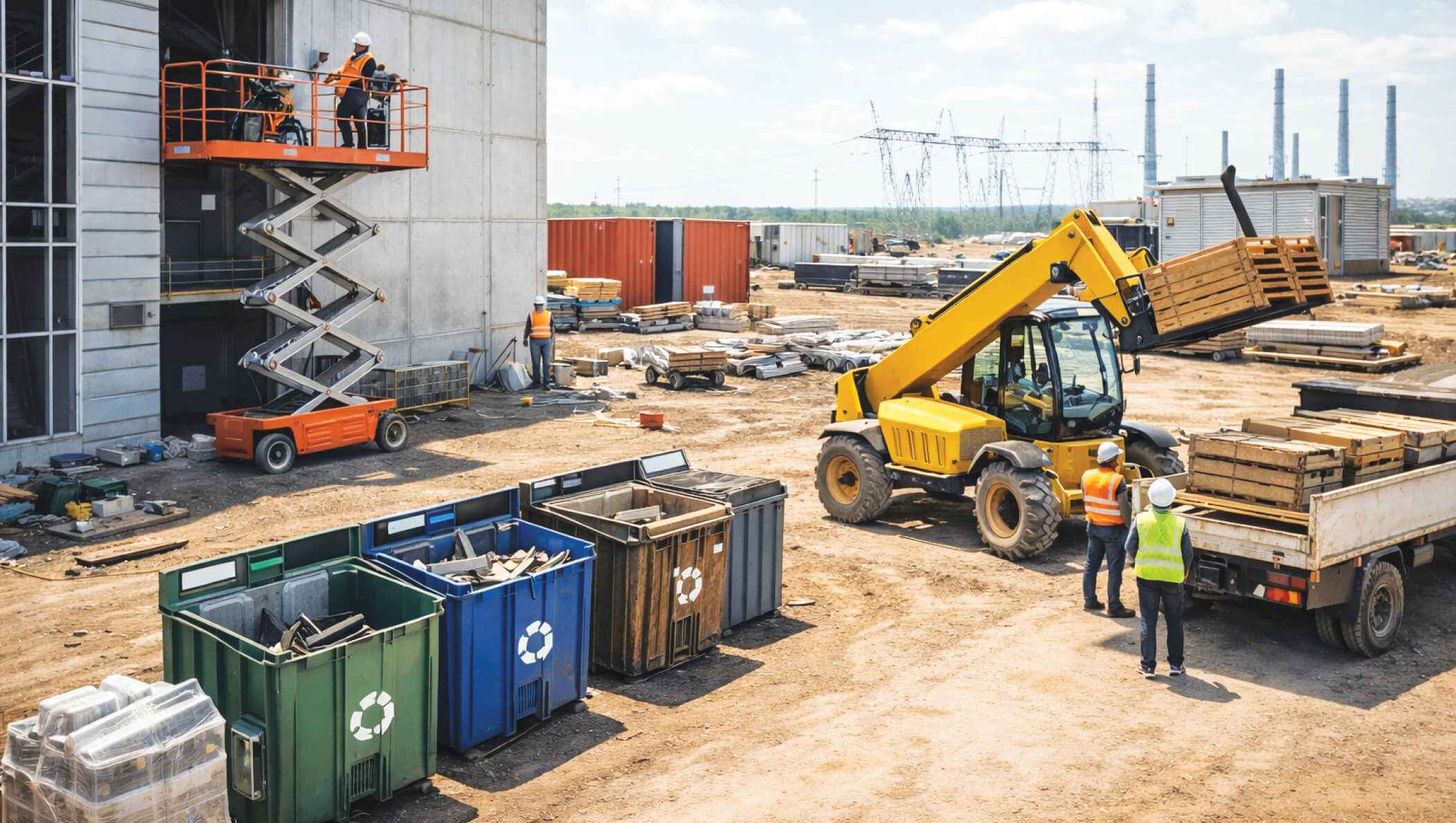
Utility-scale work — power delivery, substations, fiber and network infrastructure — sits squarely in this spotlight. These scopes rely heavily on aerials, telehandlers and specialty access equipment. As data centers push for faster schedules and cleaner sites, operations are being evaluated not just for safety and productivity, but for how they influence waste generation, material flow and carbon impact.
Measuring Waste
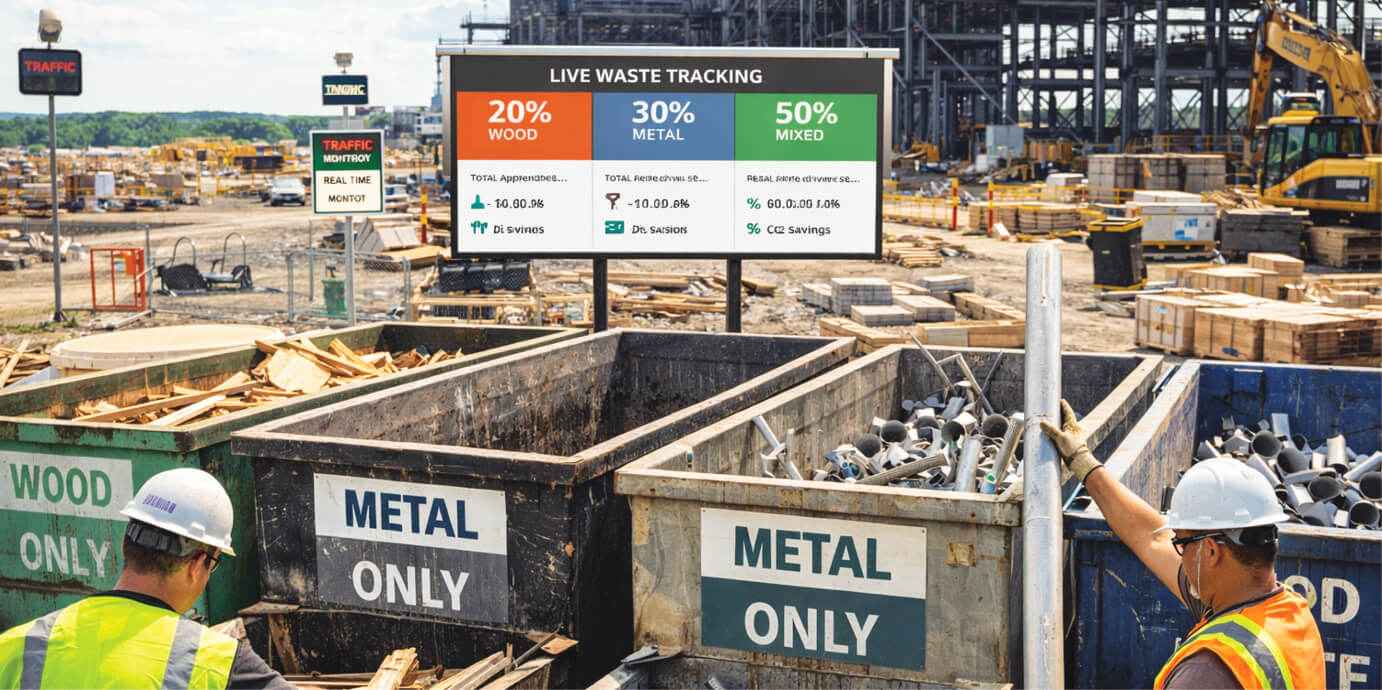
One of the most significant changes underway is visibility. AI-enabled monitoring systems, smart containers and image recognition tools are making construction waste measurable at a level that was not possible even a few years ago.
For contractors and crews, lift placement, staging decisions and equipment routing all affect how materials move across a site. Poor visibility leads to excess handling, mis-sorted debris and unnecessary haul-offs.
Better data reveals where inefficiencies occur and how access planning can reduce them. Instead of relying on estimates or monthly reports, large data center projects are now tracking:
This shift creates accountability, but it also creates leverage. Contractors who can demonstrate cleaner operations, fewer unnecessary moves and better coordination between equipment and material handling are gaining an advantage.
For many years, sustainability requirements were treated as another box to check — often handled by separate teams late in the process. AI data centers are reversing that dynamic.
Developers are learning that waste reduction, efficient access planning and cleaner material flows deliver tangible benefits:
Lifting operations, when combined with real-time visibility into site activity, play a direct role in these outcomes. Efficient lift utilization reduces idle time, limits unnecessary repositioning and minimizes interference with other trades.
New Metrics
Another notable shift is how performance is measured. Diversion percentages alone are losing influence, especially when they fail to reflect actual environmental or operational outcomes.
AI data center projects are beginning to track metrics that resonate with owners and communities alike, including:
These metrics elevate the importance of precision. Mixing materials, over-handling debris or creating contamination through poor staging directly undermines reported results. Conversely, disciplined planning supports cleaner separation and more reliable outcomes.
This evolution also rewards contractors who understand how their day-to-day decisions show up in the data. Crews who align lift placement with material sorting zones, for example, can materially influence project metrics that matter.
What’s Coming
One of the clearest signs of this broader shift is the emergence of public commitments to zero wood waste on major projects. Wood is one of the most common — and historically under-optimized — construction waste streams. On data center sites, it shows up in pallets, crates, temporary structures and packaging for electrical and mechanical equipment.
A public zero wood waste commitment signals more than an environmental goal. It reflects confidence that visibility, process discipline and coordination across trades can make such targets achievable. For lifting professionals, this means wood waste is no longer someone else’s problem. How materials are accessed, staged and moved affects whether wood is recovered cleanly or ends up contaminated and landfilled.
These commitments are setting expectations that will likely extend beyond wood to other material streams.
Driving the Pace
Notably, many of these changes are being led by private-sector companies rather than policy mandates. Technology firms operate on long investment horizons and face pressure from customers, employees and host communities regardless of regulatory cycles.
As a result, standards are rising even in jurisdictions with limited formal requirements. Contractors supporting AI data centers are expected to meet owner-defined benchmarks for transparency, reporting and performance.
For equipment providers and contractors, this creates both pressure and opportunity. Those who adapt early by integrating data into operations, refining access planning and aligning with cleaner material flows are positioning themselves for sustained demand in one of construction’s fastest-growing sectors.
The implications are practical and immediate:
AI data center construction is reshaping how success is defined on the jobsite. For lifting professionals who recognize this shift, this represents a chance to not only keep pace with growth. It is a differentiator that affects bid selection, preferred contractor status and long-term relationships with clients.
Mar 23, 2026

Lift & Access is part of the Catalyst Communications Network publication family.