A major equipment trend over the years has been the transition from diesel and gasoline to cleaner alternative energy sources to both ensure cleaner air and safer working conditions and stay in compliance with federal, state and local emissions regulations. While all alternative energy sources have their benefits depending on application and duty cycle, propane continues to stand out.
For several decades, propane has been a mainstay fuel powering forklift fleets and despite the introduction of other alternative energy sources in the material handling sector, it remains a top choice today. With proven performance, low emissions, reduced operating costs and recent innovations boosting capability, propane-powered equipment continues to deliver unmatched value and performance in warehouses, yards and jobsites across the country.
Operational Advantages
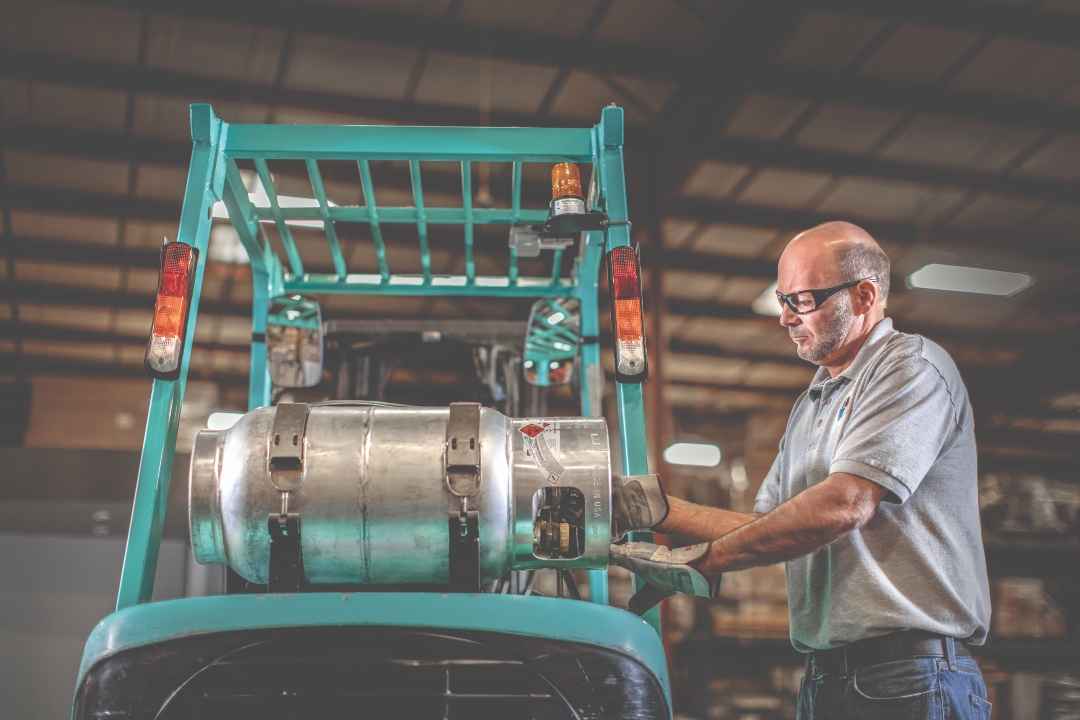
If propane couldn’t meet the demands of forklift fleets, none of its other advantages would matter. Fortunately, propane is more than up to the task. A single propane cylinder can power a forklift for more than eight hours without a drop in power. Likewise, propane forklifts maintain more consistent travel speeds and acceleration, especially when bearing heavy loads.
Because propane engines boast such low emissions, especially when compared to diesel engines, they’re safe for use both outdoors and indoors (with proper ventilation). This makes them especially versatile across jobsites, yards, warehouses and more.
Minimizing downtime is another way propane shows its value. Quick cylinder changes can be done in mere minutes. While all fuels require safe handling, propane doesn’t pose the same risks due to its stable performance at all temperatures and simpler refueling. And because it is so clean, it causes less engine wear and doesn’t require the aftermarket filters and fluids that many diesel vehicles do. This means more uptime and less time in the shop for maintenance.
Low-Cost Advantages
Operating costs are another key consideration when choosing energy sources for forklift fleets, and propane delivers savings on multiple fronts. First and foremost, propane typically costs much less than diesel and gasoline on a per-gallon basis, with fuel savings up to 50 percent. And because propane is produced in the United States, propane prices are more stable and not as susceptible to extreme fluctuations the way imported energy sources can be.
Many propane suppliers also offer flexible fuel contracts, allowing customers to lock in lower prices and help fleets plan their fuel budgets over the long term without worrying about short-term price fluctuations. Factor in the fewer maintenance requirements and that it doesn’t need diesel exhaust fluid or diesel particulate filter replacements, and the total cost of ownership becomes even more appealing.
Propane refueling infrastructure is also more affordable and scalable compared to other energy sources.
Not only can large operations store over 100,000 gallons of propane on site, but refueling stations can be installed with a relatively low upfront investment and scaled to meet future operational needs.
Low Emissions Advantages
Propane is a non-toxic energy source that produces significantly fewer emissions than diesel and gasoline. Today’s low-NOx (nitrogen oxide) propane engines are up to 90% cleaner than Environmental Protection Agency standards, and propane is recognized as an alternative fuel under the Clean Air Act. These propane engines emit up to 96% fewer NOx emissions than diesel and near-zero particulate matter emissions, making them a significantly cleaner option.
For fleets utilizing propane forklifts, renewable propane is also now available as an even more sustainable energy solution. It offers the same benefits as conventional propane — reliability, portability and power — but with the added benefit of reduced emissions when compared with other energy sources. It can be used with existing propane-powered vehicles and refueling infrastructures without equipment modifications.
Renewable propane is made from a variety of renewable materials and feedstocks, including camelina plant oil, vegetable oil, animal fats, used cooking oil, soybean oil and animal tallow. At the point of combustion, renewable propane’s carbon intensity — the carbon emitted for every unit of energy it produces — is four times lower than conventional propane and five times lower than diesel. Renewable propane has one of the lowest carbon intensity scores of all energy sources.
Transforming the Future
Propane makes meaningful progress on the road to near-zero emissions for forklift fleets looking to stay ahead of changing emissions regulations, but more importantly, it helps promote cleaner air and safer working conditions for forklift operators and other employees because it doesn’t produce the same NOx emissions and other fumes created by diesel engines. Reduced fumes can lead to more positive outcomes for the health and safety of workers, especially those who are prone to respiratory issues.
From its lower emissions creating a safer environment for workers, to lower fuel and maintenance costs, to unmatched operational efficiencies that keep forklift fleets running at full capacity, it’s no wonder propane is a smart energy choice for material handling operations.
Oct 03, 2025

Lift & Access is part of the Catalyst Communications Network publication family.