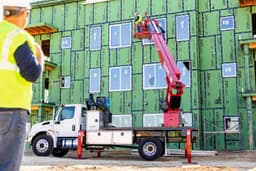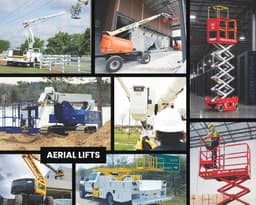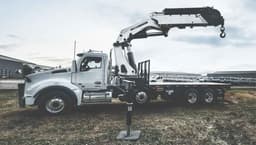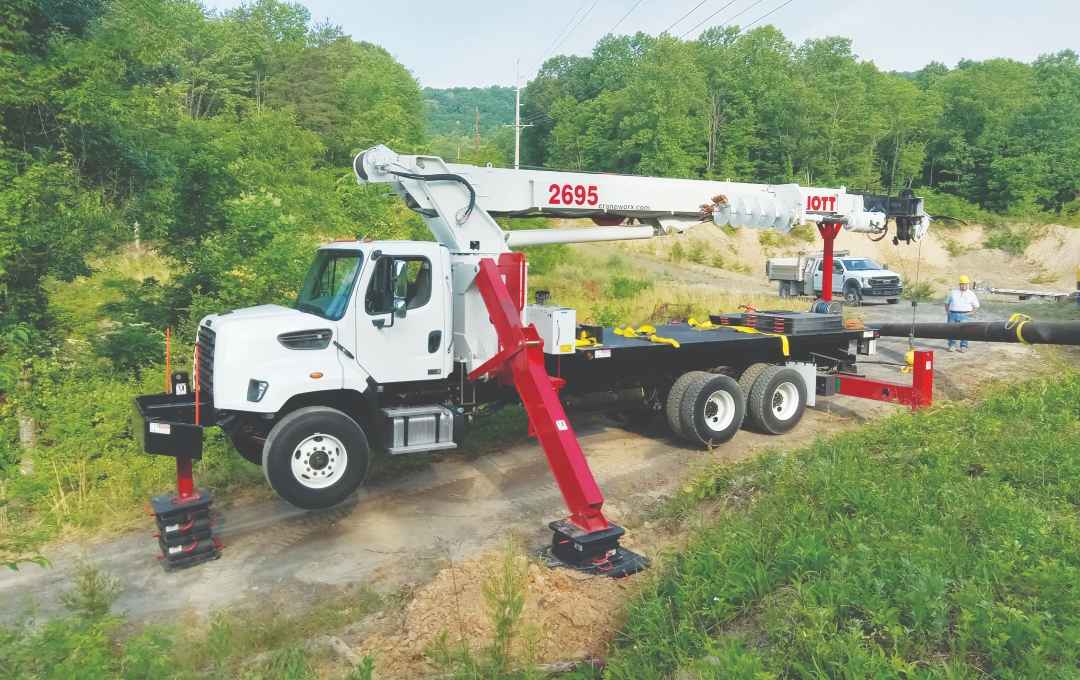
Utility crews employ a wide range of equipment, including aerial devices, digger derricks, boom trucks and compact crawler lifts that must be properly supported, stabilized and leveled to some degree. Setting up on sloped ground can be especially challenging without the use of cribbing, which can play a vital role in leveling the equipment.
Equipment used by utilities and utility contractors is typically equipped with either stabilizers or outriggers, each serving a distinct purpose in ensuring equipment stability:
Equipment manufacturers provide instructions for the proper deployment and requirements for levelness, while the American Society of Mechanical Engineers and the Occupational Safety and Health Administration address this in standards and regulations. Be sure to refer to your operator’s manual for equipment setup procedures.
Level Up the Right Way
Floats attached to the end of the stabilizer or outrigger are outfitted with either a fixed foot, a ball-and-socket or hinged joints. Each float type has differing limitations that impact the levelness of the supporting materials or the footing. The lack of a simple, adaptable leveling tool often forces crews to use wedges or other improvised materials that aren’t consistent or reliable.
Careful planning and prep work are required when setting equipment up on a sloped surface. Some solutions for overcoming this challenge are to dig out an area to create a level surface or use structurally sound wedges or other cribbing products that offset the angle of the hillside.
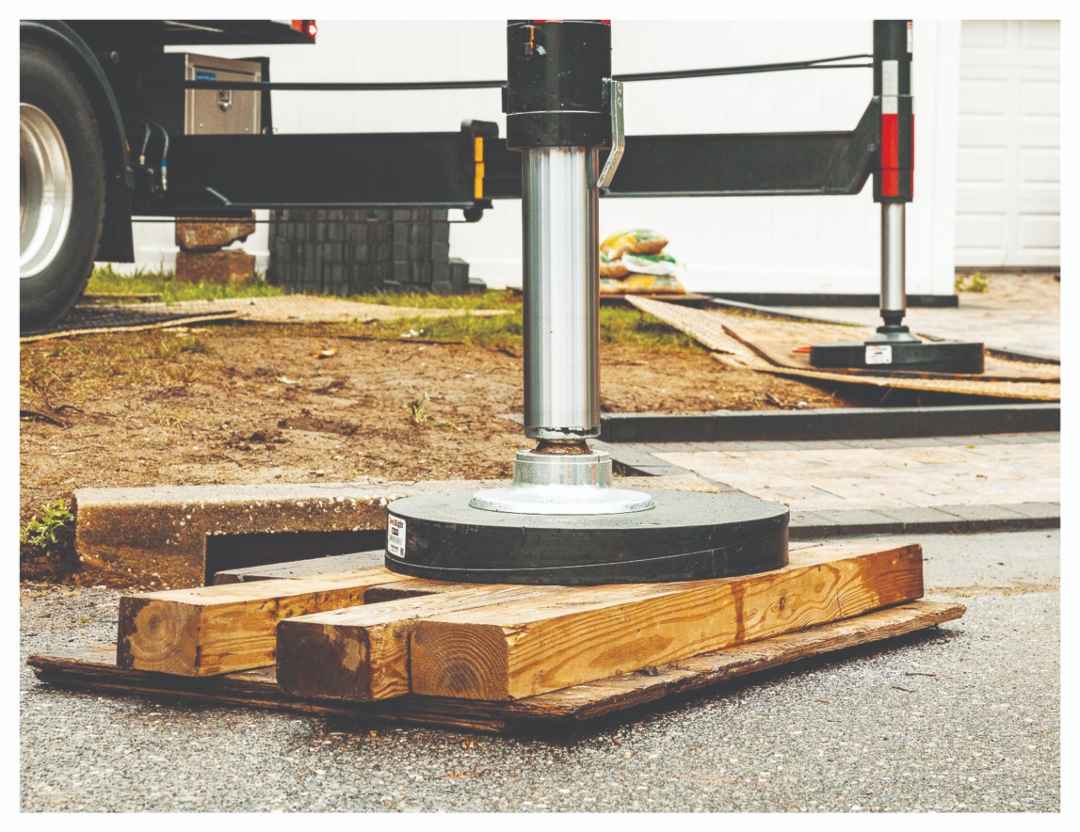
Designed to meet that challenge, for example, LevelRight from DICA has the ability to adjust in two planes, up to 5 degrees each, for a total of 10 degrees in a single plane. This multi-directional flexibility, combined with a built-in bubble level and compatibility with other supporting materials, means crews can establish a level base quickly, safely and without wedges with pre-defined angles in a single plane or excessive site prep.
When leveling capabilities of stabilizers and outrigger jacks cannot compensate for uneven ground, cribbing can be used to fill the gap or raise the height of the ground. Cribbing is a supporting material and needs to be treated with the same level of scrutiny as an outrigger pad or a crane mat. It must be strong enough to withstand the imposed loads and pressures and be stiff enough to spread the load.
Key Cribbing Considerations
Proper training in the use of cribbing is crucial, as improper use can create additional hazards rather than mitigating them. The key considerations are:
Mitigate Instability
Stacking materials under stabilizers and outriggers increase the risk of instability. Here are some suggestions for mitigating instability.
The base of any cribbing stack must be large enough to reduce the imposed loads to levels the ground can withstand or less than the allowable ground bearing pressure.
The bottom of any cribbing stack must be on a level surface or platform, and the bottom layer should be in full contact with the ground without any gaps between members.
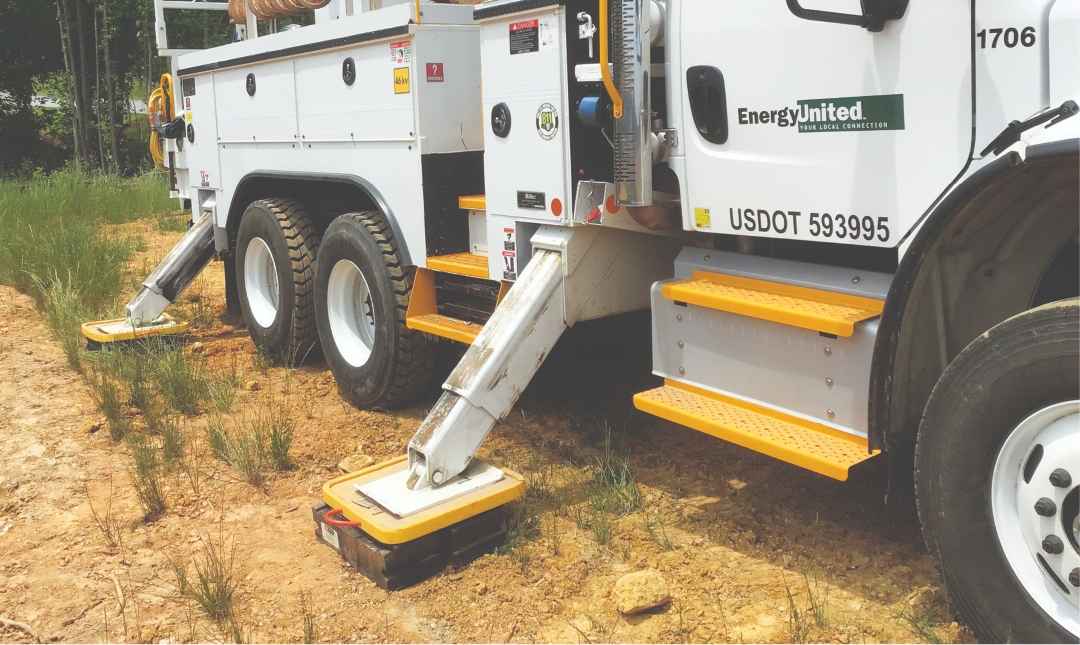
Cribbing must always be vertical or at a 90-degree angle to a level surface. Never build a cribbing stack that is not at a right angle and then place shims or a leveling product on the top of the stack. Always establish a level surface before building a vertical stack.
Cribbing stacks should either be wider at the base than at the top, forming a pyramid shape, or the same width from top to bottom. The 1-to-3-rule — when the base is three times wider than the height of the stack — is good to follow.
Avoid creating gaps or voids between materials when creating a cribbing stack. This may contribute to instability, peak loading of individual cribbing members and material or ground failure.
If multiple layers of materials are required, always ensure adequate friction between each layer. Ensuring the cribbing stack is at a right angle will minimize lateral movement. However, when needed, one way to add friction is to add neoprene between the layers to reduce unplanned movement during operations.
Before use always inspect the materials to ensure they are in good condition. These materials must be viewed and evaluated as critical supporting materials. Uniform hardwood timbers in excellent condition or synthetic pads or blocks are ideal options.
Because stacking increases risk, it is best to consider products manufactured for this specific purpose. Cribbing blocks with an interlocking surface or interlocking mechanism are typically the best options, as they add mechanical sliding resistance.
For instance, DICA’s ProStack Pyramid Lock and Slot Lock products are designed to lock together to resist sliding. Both products can interlock with themselves and with other supporting materials. Some SafetyTech outrigger pads are specially designed for this purpose.
Utility work demands precision, especially when equipment is operated on uneven or sloped ground. By incorporating the right cribbing strategies, choosing engineered support solutions and understanding the limits and capabilities of your equipment, crews can prevent instability before it starts. Safety starts with proper training and attention to ground conditions.
Kris Koberg is the President and CEO of DICA, a manufacturer and distributor of supporting materials, ground protection, site access mats and associated products.
Sep 08, 2025
Kris Koberg is the President and CEO of DICA, a manufacturer and distributor of supporting materials, ground protection, site access mats and associated products.

Lift & Access is part of the Catalyst Communications Network publication family.