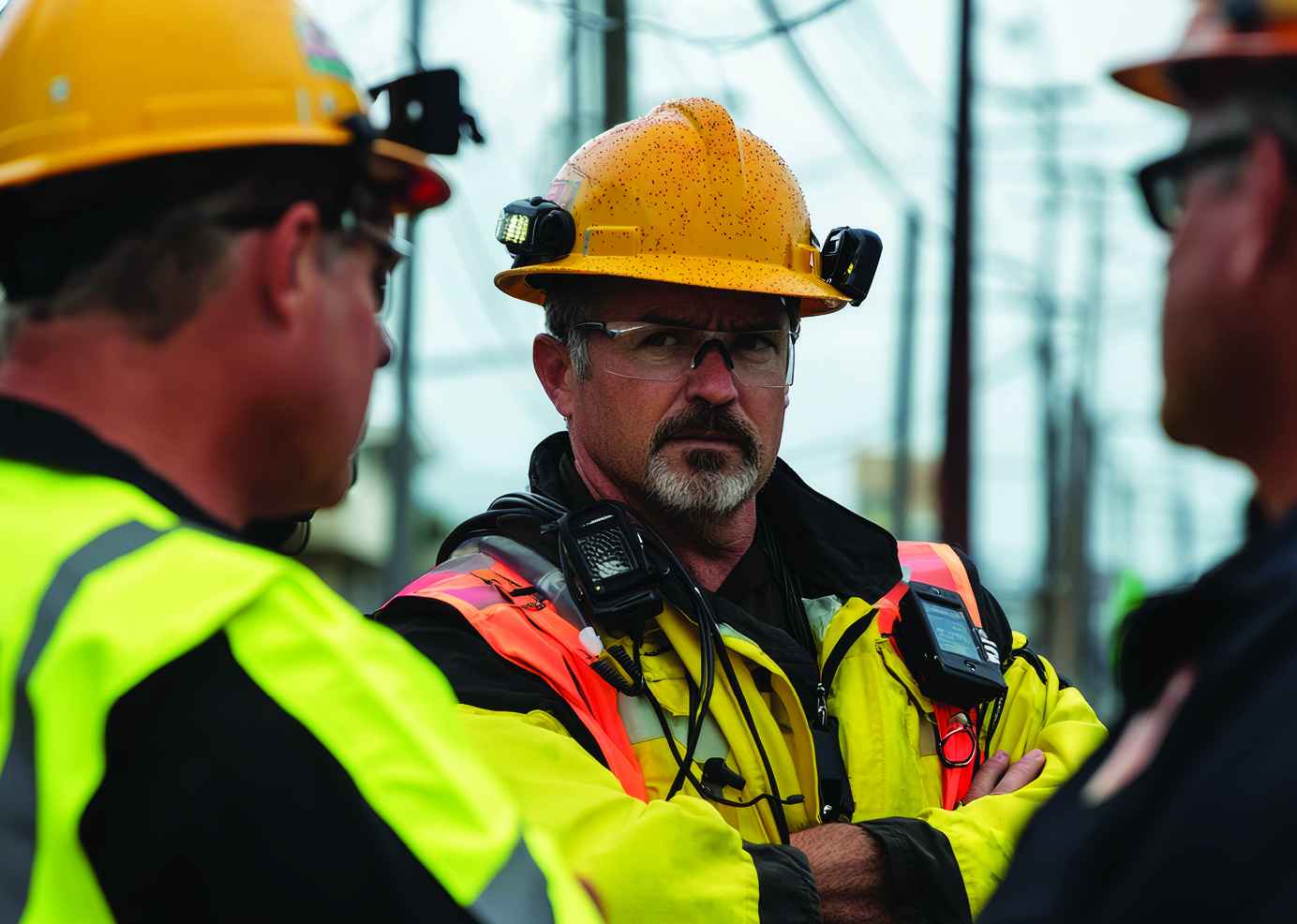
One of the most effective tools for improving utility safety is among the most overlooked — the job safety briefing. These routine conversations are so effective, the Construction Safety Research Alliance (CSRA) at the University of Colorado Boulder has identified their absence as one of three precursors of serious injuries and fatalities (SIFs) on jobsites.
While all utility field crews should conduct job safety briefings, however, why are some effective while others overlook crucial details? What tools and processes can utilities leverage to make these briefings more effective? How can field crews hold conversations that identify more hazards and put more controls in place?
These topics are covered in Urbint’s webinar, Life-Saving Job Briefings: How Work Safety Plans Can Eliminate Serious Injuries and Fatalities, where industry veterans detailed their experience making job safety briefings more effective.
Understanding Why
Job briefings save lives, but too often they’re treated as another form to fill out or another box to check.
“There were a lot of checkboxes,” said Mike McCallan, former head of electric operations at National Grid. “A lot of times, I think our workers didn’t really understand the real value and the ‘why?’ behind them.”
When he noticed some persistent safety issues during his time at National Grid, McCallan conducted an analysis of SIF data that spanned a 10-year period. Through this research, he found that 50% of safety incidents had a deficiency in the job briefing. In each case, the job briefing wasn’t written down, it wasn’t discussed or it never happened.
Once he discovered the issue, he got safety advocates from across the organization to look at the job briefings. The results were overwhelming. From that initial analysis, McCallan was able to implement new job safety briefing processes that detailed critical tasks and got more workers involved in the conversation.
Kate Nichols, corporate health, safety and industrial hygiene manager at Georgia Power agreed. She had found that the most effective job safety briefings explain why something is a hazard and why it needs a control.
“Those conversations are great when someone says ‘because’ or ‘we do this because of that,’” she said. “Then everyone on the crew is on the same page.”
Work Planning
While job safety briefings are effective tools for safety, they also offer an opportunity for field crews to reassess work routines and consider the full range of safety tools at their disposal.
“Something that gets overlooked as a control is work planning,” said James Upton, director of safety operations at Urbint and former vice-chair of SIF research at the CSRA. “Careful work planning can often eliminate or substitute hazards on site.”
McCallan and Nichols noted that field crews fall into patterns of behavior, but job safety briefings empower them to consider their activities with fresh eyes.
“Think differently,” said Nichols. “For example, place your vehicle as a barrier across the lane.”
McCallan noted how safety improves with just a little extra work planning. “Over the years, I saw good supervisors that would not just give the work out but would go ahead and look at the job ahead of time,” he said. “Planning is a big part — time of day, location of equipment, all of those play into it.”
Secret Ingredient
Written job safety briefings have proven critical to safety at both National Grid and Georgia Power but both McCallan and Nichols stressed the importance of conversation in the briefing process.
“At some point, we made a transition to a job safety briefing being a piece of paper,” Nichols said. “But it’s really the conversation that goes with that piece of paper and the individuals that are having those conversations.”
“It’s the engagement of everybody on the team,” McCallan added. “It’s not a monologue, it’s a dialogue.”
New hires with little experience may not recognize common hazards on utility jobsites. Likewise, veteran workers tend to normalize the risk of hazards over time. Both groups can advance safety by sharing their knowledge and observations with each other.
“If we put out safety guidelines and have a conversation in the field about them, that makes everybody’s life easier,” Nichols said.
Tell a Story
At CSRA, Upton noted, new research on construction and utility safety has shown the unique value of storytelling in making the safety message hit home. “If you can pull in some kind of emotional connection to the task that you’re doing, then your hazard prediction rates are higher in the future,” he said.
“One of the things we’re trying to do at Georgia Power is tie past incidents to tasks,” Nichols related. That way, when you’re having these discussions in the field, things that happened in the past build a connection so your risk perception is different.”
McCallan has found storytelling effective for safety as well. “We learn from past mistakes, we learn from successes,” he pointed out. “Having somebody share a story is valuable in how we identify hazards.”
Technology Support
“If you ask a typical supervisor what keeps you in the office, it’s paperwork,” said McCallan. “They’re not out in the field seeing what’s happening and making sure that things are being done safely and productively. Using a digital process allows them to have more of those conversations now than before.”
Georgia Power is already leveraging technology for its job safety briefings. “The feed will come from our work management system with a list of tasks into that app for the crew to look at, and it’ll be designated high, medium or low risk,” Nichols explained. “That includes things that workers might have overlooked or just not had a conversation about.”
Nichols also pointed out that turnover in recent years has driven the need for technology. New hires into the industry are often inexperienced with leading job safety briefings, and technology offers a way to make them more consistent and effective.
“With the app, there will be things that the crew leader can pull from — short videos, lessons learned from another jobsite incident — that help trigger the conversation,” Nichols said.
Ultimately, job safety briefings don’t serve as a separate task. Good ones stand as a way that a company’s safety culture shows itself. “When safety is part of the business, you’ve won,” Nichols said.
Jan 26, 2026

Lift & Access is part of the Catalyst Communications Network publication family.