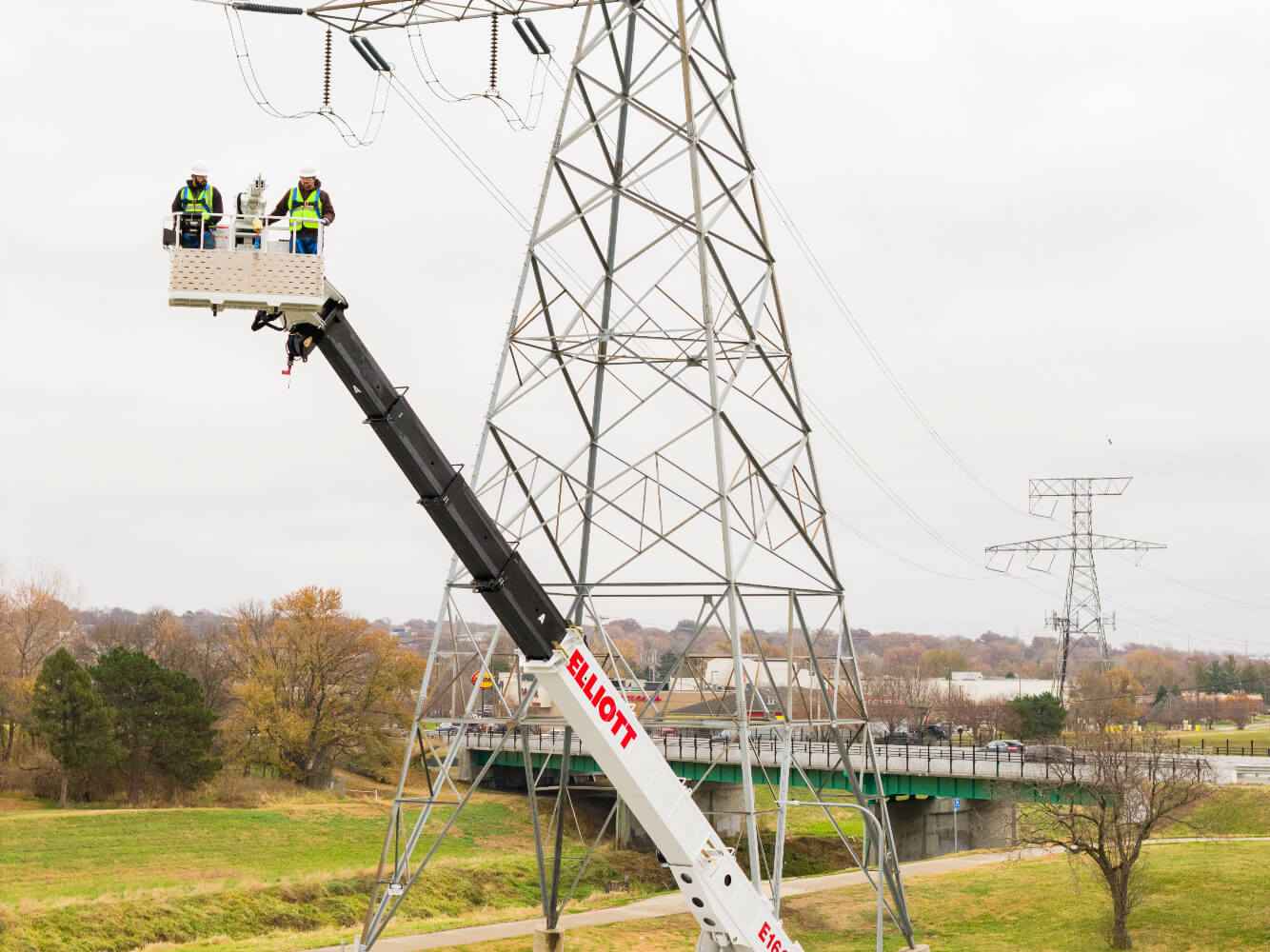
(Sponsored Content) - As utilities across North America continue modernizing aging transmission infrastructure, contractors are under growing pressure to complete more work with tighter labor availability, shorter outage windows, and increased safety expectations.
That shift is driving renewed attention toward equipment that can help crews reduce setup time, simplify jobsites, and improve productivity at height.
For years, high-reach transmission work has commonly required two separate pieces of equipment on-site: an aerial device to position personnel and a second machine ,often a crane, to lift materials into place. While effective, the process adds complexity to both setup and execution. Two trucks mean additional operators, more congestion in the work zone, and more coordination during critical lifts.
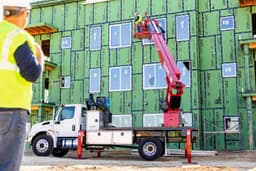
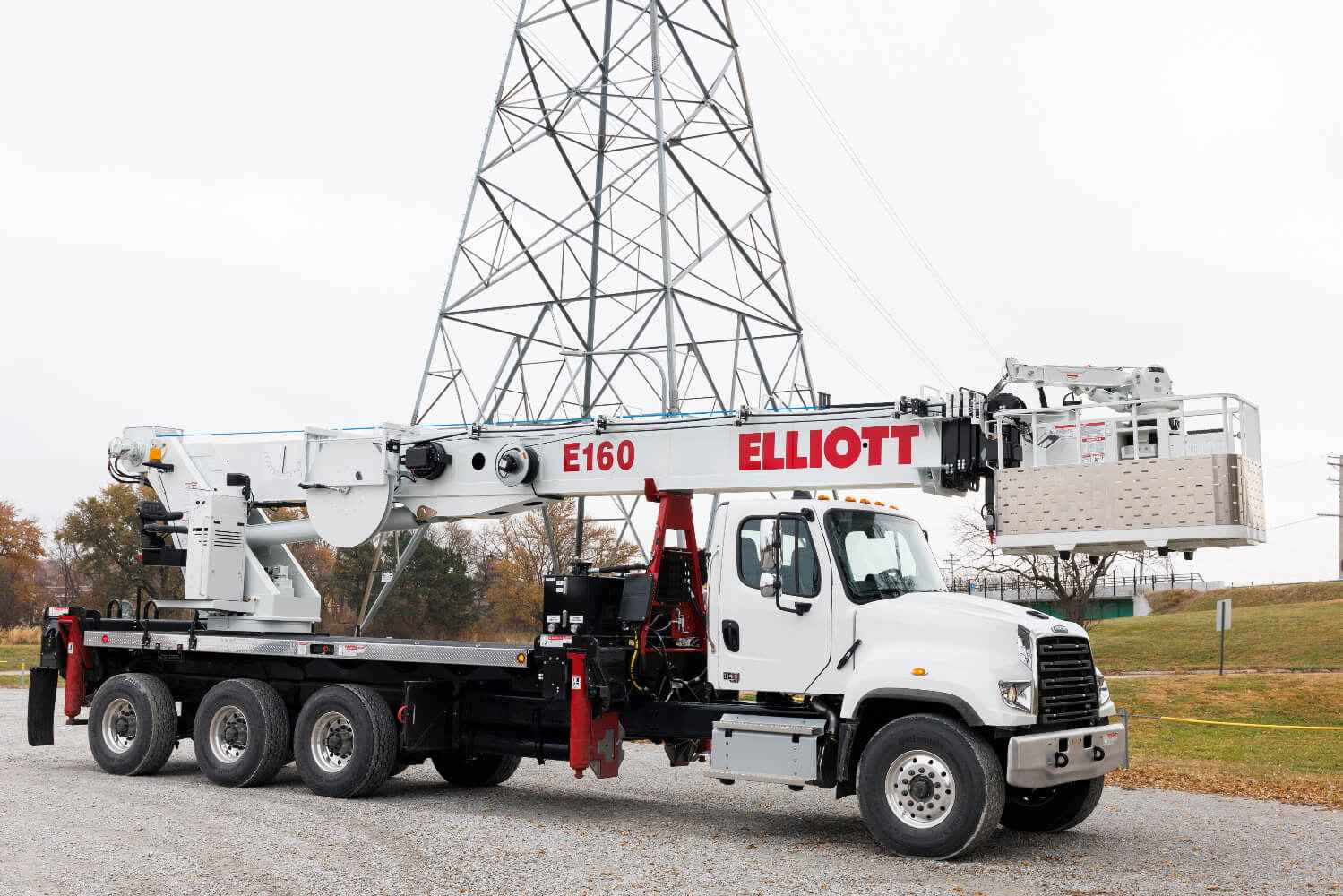
Elliott’s new E-Line Material Handling Platform, designed for its E145, E160, and E190 transmission aerials, was developed specifically around the operational realities utility crews face every day. Rather than treating material handling and elevated access as separate functions, the platform integrates both into a single high-reach aerial solution.
A Shift Toward Efficiency at Height
Transmission work is becoming more demanding in both scale and complexity. Utilities are upgrading existing infrastructure to support grid resiliency initiatives, renewable energy integration, AI-driven data center demand, and broader electrification projects.
At the same time, contractors continue facing labor shortages and increasing pressure to improve operational efficiency.
That environment has pushed fleet owners to look more closely at equipment utilization and jobsite productivity. Reducing setup time and limiting the number of machines required for a project can create meaningful gains across a utility contractor’s operation.
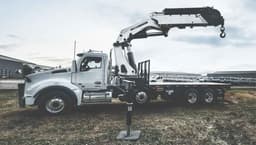
The hydraulically self-leveling platform incorporates an independently operated hydraulic material handler capable of lifting, rotating, extending, and positioning up to 1,500 lb directly from the platform. In many transmission applications, crews can now perform work traditionally requiring two trucks with a single machine.
For contractors working in constrained rights-of-way or along active roadways, reducing the amount of equipment on-site can also improve traffic flow, simplify setup logistics, and reduce overall jobsite congestion.
Designed Around Real Utility Applications
The E-Line platform is available on Elliott’s E145, E160, and E190 transmission aerials, giving utilities and contractors multiple working height options depending on application requirements.
One example is transport and setup.
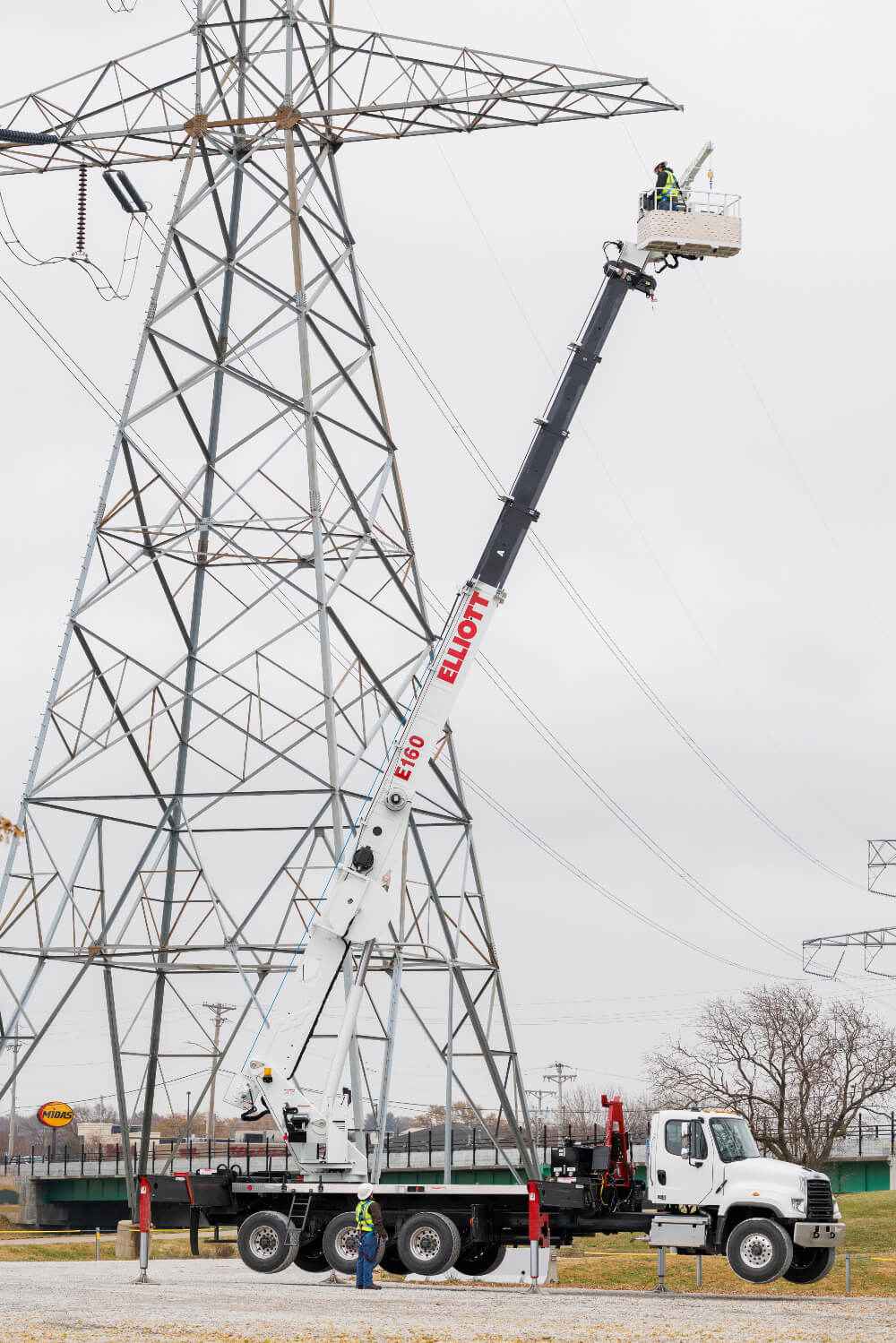
Traditional pin-on platforms often require crews to manually install and remove the basket at each location, a process that takes time and introduces additional handling risks. Elliott’s platform remains attached during transport, helping crews arrive ready to work without additional basket installation procedures.
That may sound like a small operational detail, but over the course of multiple setups per day, eliminating manual platform installation can have a measurable impact on productivity and crew fatigue.
The platform also uses active hydraulic self-leveling technology and full hydraulic rotation to improve stability and operator control at extreme working heights. As boom geometry changes at heights exceeding 145 ft, maintaining a stable working position becomes increasingly important for both productivity and operator confidence.
The goal is not simply reaching the work, it is allowing crews to work safely and more effectively once they get there.
Enhancing Safety in High-Reach Transmission Work
Safety remains a major focus in transmission work, particularly as crews operate at extreme heights and in challenging field conditions.
The Elliott E-Line platform was designed to help simplify those environments. Its hydraulically self-leveling system helps maintain a stable working position throughout boom movement, while full hydraulic rotation allows operators to stay properly oriented to the task without unnecessary repositioning.
By integrating material handling directly into the platform, crews can reduce the need for multiple machines operating within the same work zone, helping simplify jobsite coordination and reduce congestion. The transport-attached platform also eliminates manual basket installation at each location, helping reduce setup-related handling risks for operators in the field.
Combined with a 30-mph wind rating and 2,000-lb platform capacity, the system is designed to help crews work more confidently, efficiently, and safely during demanding transmission applications.
Supporting Long-Term Fleet Strategies
Another notable aspect of the platform is retrofit compatibility.
Elliott designed the system to retrofit onto select legacy E-Line aerials already operating in the field, allowing fleet owners to upgrade existing equipment without immediately cycling trucks out of service.
As utility contractors continue balancing capital investment with increasing workload demands, retrofit-ready technologies may become an increasingly important part of long-term fleet planning.
The broader utility market continues moving toward equipment solutions that combine versatility, efficiency, and operational simplicity. In that environment, single-truck solutions capable of both elevated access and material handling are likely to draw increasing interest from transmission contractors looking to do more with fewer resources.
Learn more about the E-Line Platform and Elliott’s transmission aerial lineup at elliottequip.com.
May 29, 2026

Lift & Access is part of the Catalyst Communications Network publication family.