Is no industry safe from the spread of AI? It would appear not. Because, as this article is being written, many fall protection providers are using AI to aid in the design, fabrication, installation and lifetime maintenance of their fall protection equipment.
As prudent as most people are to integrate new technology into critical safety systems, we must remember the urgency at stake in preventing fall deaths in the workplace.
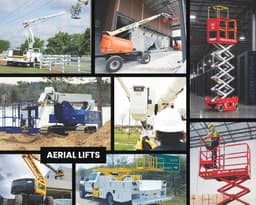
Currently, falls are the leading cause of injury and fatality on construction sites. According to the International Powered Access Federation (IPAF), the top mobile elevating work platform (MEWP) categories involved with fall incidents are scissor lifts (26%), self-propelled boom lifts (24%) and vehicle-mounted lifts such as bucket trucks (18%).
From 2012 to 2022, approximately 55% of falls reported to IPAF resulted in a worker fatality. With a near one in two chance of surviving a fall, preventing the fall altogether becomes a much more sensible and safer solution.
Fall Protection Requirements
Federal OSHA regulations 1910 (General Industry) & 1926 (Construction) require employers to provide fall protection when employees are exposed to falls of greater than 4 feet or 6 feet, respectively. At those heights, OSHA deems guardrail, safety netting or personal fall protection systems as equally acceptable mitigation methods.
However, depending on the height of the fall hazard, not all solutions will be equally feasible. Furthermore, some companies believe that minimum compliance is sufficient to protect their workers, while others believe that more proactive measures are needed to reduce risk as much as possible.
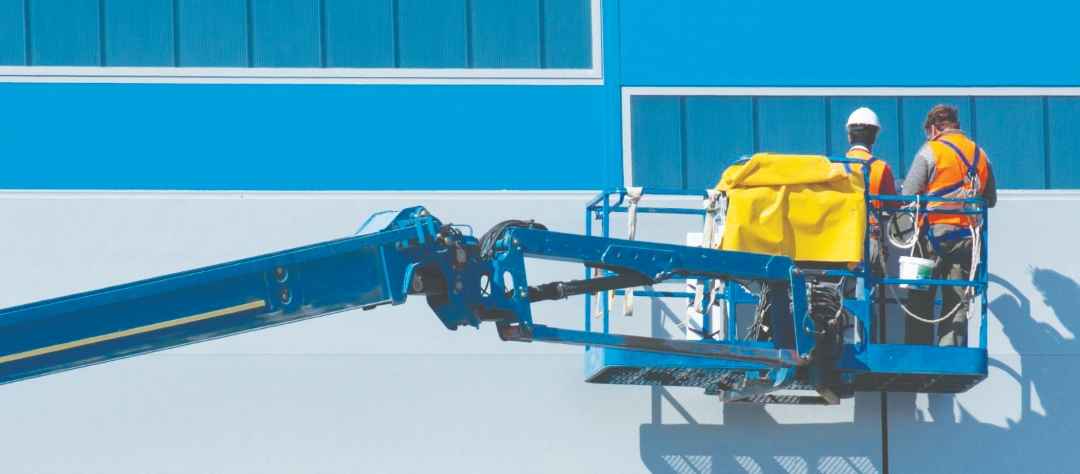
Scissor lifts, boom lifts and other MEWPs are an excellent solution for elevated work as they incorporate multiple forms of fall protection simultaneously, especially on dynamic jobsites or busy facility floors.
First, almost all MEWPs have integrated guardrails to help protect the workers. And, as long as the worker is provided with a body harness and connection device, most MEWPs also contain an integrated anchor point that users can utilize for their personal fall arrest system (PFAS).
Fall protection equipment is not always required in scissor lifts, according to OSHA, but either fall restraint or fall arrest equipment is required in boom lifts. Proactive organizations will provide workers with a PFAS whenever using a MEWP to prevent fatality from accidental falls.
However, employers must be sure to supply a connection device with a sufficiently short stopping distance to protect the worker. Typically, Class 2 SRL-Ps are the recommended connective device for MEWPs and are regarded as the most effective when restraint lanyards are not in use.
Whatever connection device is provided, employers must ensure their employees never work beneath the device’s minimum required fall clearance height, as specified in the product manual.
Current Uses For AI
AI is now being used for fall protection. The tool, sometimes referred to as “Amplified Intelligence,” provides engineers, project managers and others with more context and internal data as they design, specify and develop fall protection programs.
For example, AI agents are fed local, state, federal and industry-specific OSHA programs (MSHA, EM385, etc.). Those agents can then cross-reference the regulations against the program, detect accidental noncompliance and alert the decision-maker so the error can be rectified.
Errors in a fall protection program can equate to tragedies in the field. In the MEWP world, this can be relevant when providing fall protection in boom or aerial lifts. According to EM385 (OSHA for the Army Corps of Engineers), only fall restraint is allowed, not fall arrest.
Furthermore, AI’s assistance in developing code is helping accelerate the pace of software development for fall protection end users. For example, compatibility apps are being developed that allow users to input details about their work area and the equipment they use.
In practice, the app could generate a report indicating whether the work is being performed at an appropriate height for the equipment provided, make suggestions and even track user compliance over time. This can be extremely helpful for multi-site safety managers, auditors and many other roles involved in confirming the compliance and effectiveness of a user’s fall protection program.
Future Uses For AI
Currently, many use cases for AI are still in the development stage because the data required to create more complicated AI agents is still being fed into databases. Providing fall protection is often a nuanced process. Many attempt to eliminate hazards or provide the most effective equipment possible, but sometimes unforeseen constraints or limited equipment availability hinder those efforts.
While most companies strive for maximum effectiveness, minimum OSHA compliance and the absence of a fall occurring are really the two main thresholds that must be met daily. Other than that, each improvement will only make a company’s fall protection program more proactive, more effective and, hopefully, better able to prevent injuries and fatalities.
Perhaps in the near future, AI bots will be so intelligent and so capable that they can not only help decide the best fall protection equipment for an application but even help restructure how the work is performed. If AI is integrated early enough in the planning process, the possibilities are endless.
Over time, AI will be fed essential data that will enable architects, general contractors and fall protection providers to collaborate more effectively on configuring safer construction processes and providing proactive fall protection at every step.
For now, we have the ability to use AI to amplify our intelligence and make more informed decisions about assigning fall protection equipment. The more we can do to provide proactive solutions that aim to prevent falls, the more AI agents will learn from our actions and amplify our abilities.
Providing fall protection will still be a very “human-to-human” process, but it can be aided and maybe even improved by this promising technology. When it comes to saving lives from preventable falls, every technology at our disposal should be used to its maximum capability.
Philip Jacklin is the continuing education program manager at Diversified Fall Protection, a provider of solutions designed to keep workers safe at heights.
Jul 27, 2026

Continuing Education Program Manager, Diversified Fall Protection

Lift & Access is part of the Catalyst Communications Network publication family.