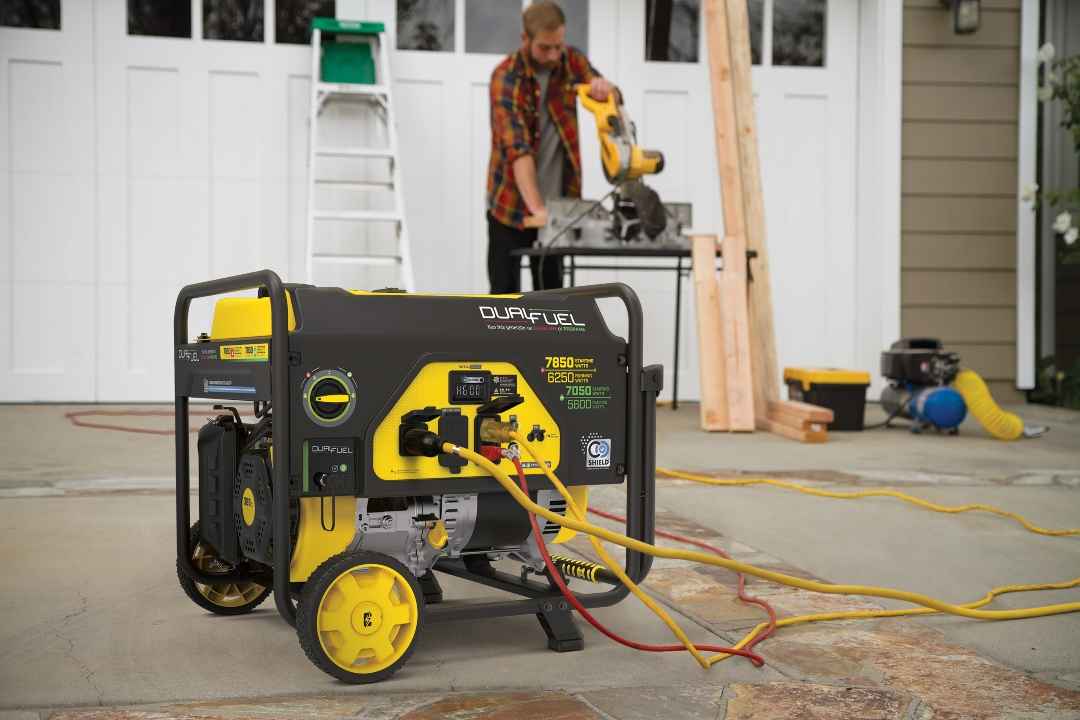
The Portable Generator Manufacturers’ Association (PGMA) is emphasizing safe use practices for portable generators, focusing on carbon monoxide (CO) risks and updated industry standards.
Generators are widely used for temporary power across construction and industrial jobsites. PGMA said proper operation is essential to reduce the risk of injury, particularly in environments where equipment may be used near enclosed or partially enclosed spaces.
The association highlighted the ANSI/PGMA G300 standard, which requires CO-shutoff technology on compliant portable generators. The updated ANSI/PGMA G300-2023 version lowers shutoff thresholds to further reduce potential exposure risks. PGMA said the original CO sensor requirements introduced in 2018 are credited with a 99% reduction in fatalities.
PGMA stated that generators should only be operated outdoors, with exhaust directed away from occupied areas. Use inside buildings, trailers, tents or other enclosed spaces is not recommended. Operators are also encouraged to follow manufacturer safety instructions during use.
The organization said that workers who feel sick, dizzy or weak while a generator is operating should move to fresh air immediately and seek emergency medical attention.
PGMA represents portable generator manufacturers and works to develop safety standards and promote safe usage practices across construction, rental and industrial applications.
Mar 17, 2026

Lift & Access is part of the Catalyst Communications Network publication family.