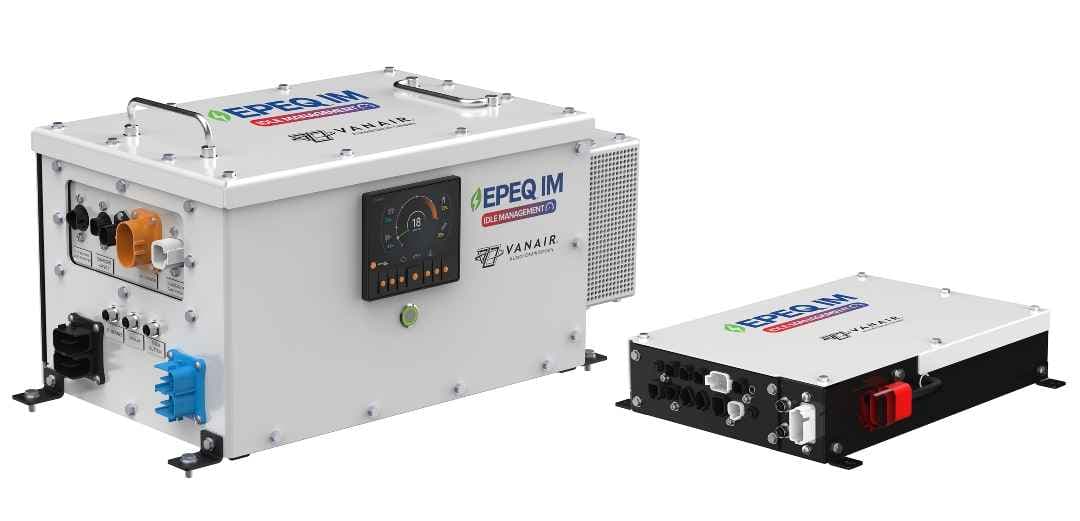
Vanair, a Lincoln Electric Company, has introduced its EPEQ IM HVAC system, which is designed to reduce engine idling, lower operating costs and extend fleet vehicle life. The system is being showcased at ACT Expo 2026 in Las Vegas, Nevada, and the Electric Utility Fleet Managers Conference in Williamsburg, Virginia.
The system is intended to address challenges related to rising vehicle acquisition costs and extended fleet replacement cycles. According to the company, engine idling contributes to vehicle wear and increased maintenance costs, with each hour of idling equating to 25 to 33 miles of driving. The EPEQ IM HVAC system automatically manages engine shutdown and restart while maintaining cab temperature to reduce unnecessary engine hours and associated depreciation.
The system integrates with factory heating and air conditioning components rather than relying on separate auxiliary HVAC units. It uses an auxiliary compressor connected to the OEM air conditioning system for cooling and a fuel-fired auxiliary heater for heating. Electrical loads are transferred to the EPEQ battery system when the vehicle is off, while a thermostat monitors cabin conditions and can restart the engine if needed.
Vanair states the design reduces installation connection points by approximately 44% compared to traditional systems and can reduce installation time by up to 50%. The system uses plug-and-play OEM-style connectors and is designed to maintain wiring integrity while minimizing failure points.
The EPEQ IM HVAC system operates automatically based on fleet-set parameters, allowing managers to establish shutdown timers to support compliance with local idling regulations. The system is controlled through a centralized 4.3-inch display that also manages other EPEQ components.
The company reports that real-world fleet use has shown reduced fuel consumption in certain applications, along with lower maintenance requirements tied to reduced engine idle time. The system is currently in development, with production expected to begin in the fourth quarter of 2026.

Lift & Access is part of the Catalyst Communications Network publication family.