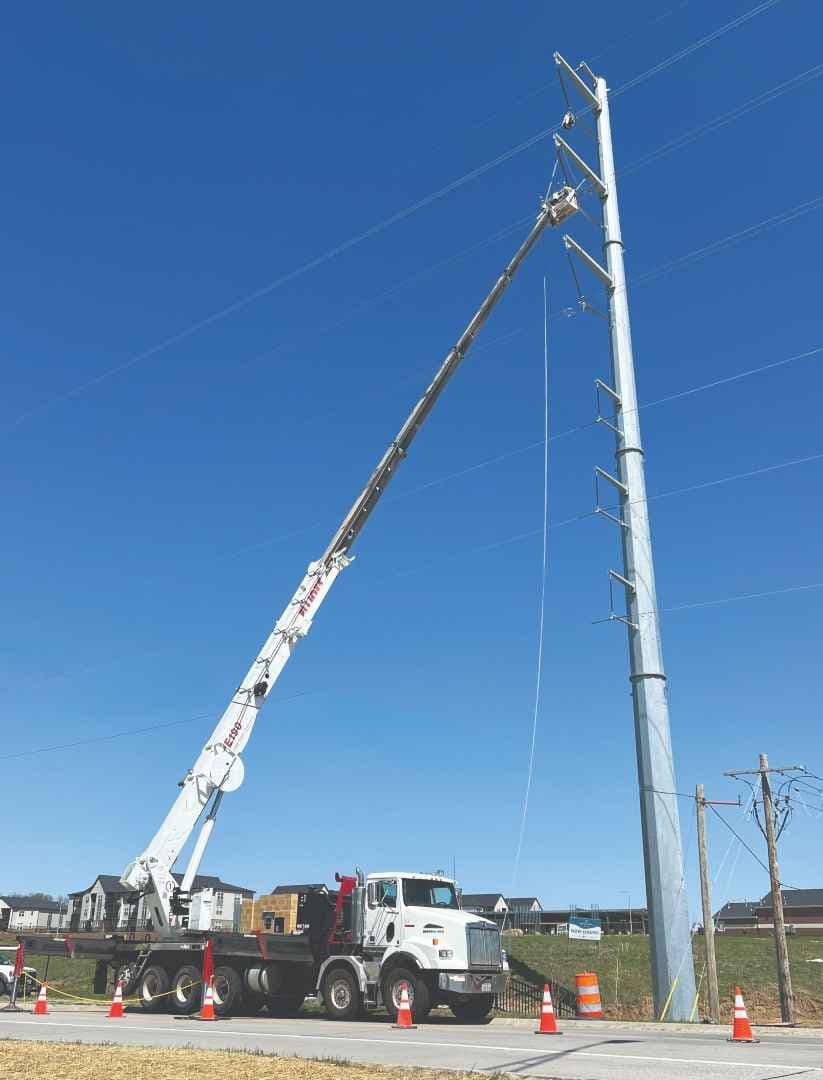
As a manufacturer of cranes, truck-mounted aerial work platforms and other equipment used by the lifting, construction and utility industries since 1948, Elliott Equipment Company has many decades of experience on the challenges facing their customers and how a customer-focused approach leads to the development of effective products and services.
Jim Glazer, president & CEO who has led Elliott Equipment Company since 2000, noted that while the company has a full slate of products in development, recent supply chain challenges also had to be addressed. “Lead times were longer than two years at one point, and due to component availability issues truck chassis manufacturers were forced to allocate supply, effectively putting an additional constraint on the market,” he said.
“With a fluid supply chain, complicated by pent-up demand to replace aging fleets, and the whole industry shipping at less than a standard rate, there was a sizable imbalance between supply and demand,” Glazer continued. “It took a while to clear, but our team has done several things over the past few years to improve our efficiency and position Elliott for further growth.
“We reconfigured many of our manufacturing processes using 5S/Kaizen, cellular flow and in-process quality gates to improve throughput,” Glazer explained further. “That’s helped shorten and make lead times more manageable for our customers.”
Glazer also pointed out that strong partnerships with chassis manufacturers make a significant difference for fleets. “It means the industry can deliver equipment that is optimized for a given chassis, and it also ensures we stay informed about evolving ECM programming changes from the chassis OEMs,” he said.
“These relationships also provide the flexibility to customize setups, so customers get exactly what they need,” Glazer added. “And if something does go wrong, having that connection means faster support and service, which keeps downtime to a minimum.”
Glazer cited other issues for manufacturers, dealers and customers. Higher costs associated with tariffs will likely play a role going forward, he noted, and some chassis suppliers are already raising prices. Emissions requirements are another challenge. Depending on regulatory changes in California and other states, chassis availability in those areas may be impacted.
“Our industry’s workforce is always something to pay attention to as well,” Glazer stated. “To help attract younger workers interested in doing utility work and servicing equipment, for example, we’re making machines easier to operate and maintain. Technologies like on-board telematics and remote diagnostics that support predictive maintenance also allow fleets to improve uptime and fleet utilization. Beyond their operational and maintenance benefits, those systems can also help improve safety.”
Serving the Market
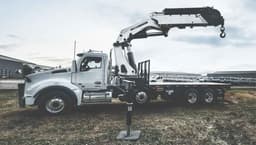
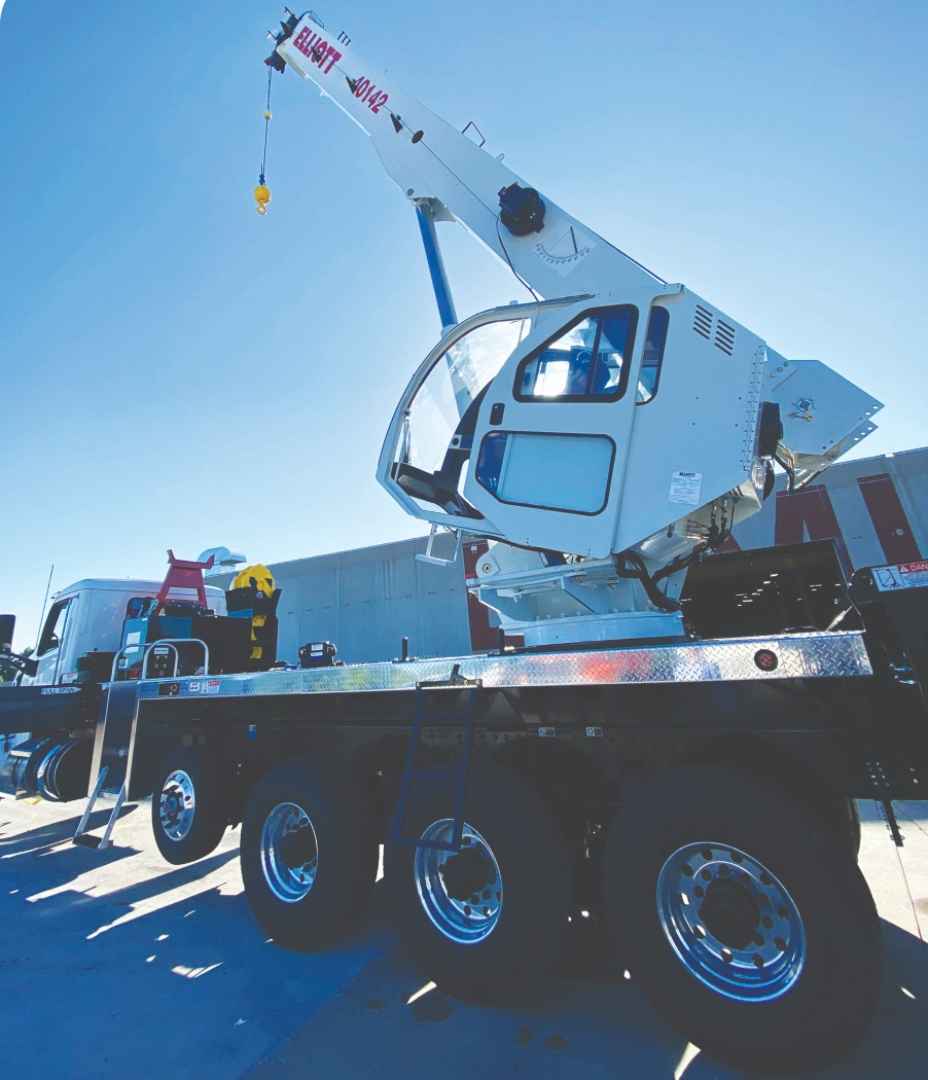
Elliott Equipment Company offers a range of customizable BoomTruck cranes with 10- to 50-ton capacities. Their technologies include DynaSmooth Hydraulic Controls for precise control and proprietary wear-pad design and friction-free jib extension for smooth, chatter-free operation under load. Many models can be equipped with a high visibility tilting cab and have Bluetooth connectivity for monitoring machine performance.
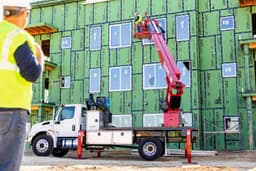
The manufacturer’s E-Line material-handling aerial work platforms feature working heights from 120 to 240 feet and can be equipped with platform material-handling and Category A insulation configurations. E-Line products also include Elliott’s EZ Crib outriggers, which provide an additional 30 inches of vertical penetration to reduce cribbing and save on setup and tear-down time. Machines with work heights above 160 feet are equipped with a built-in anemometer.
Elliott’s HiReach truck-mounted aerials can operate at heights ranging from 45 to 140 feet and have material-handling capacities of up to 15 tons. They can be equipped with a variety of work platform configurations, platform material handling, Category C insulation, rail gear and more. In light of an industry-wide shortage of CDL drivers, Elliott offers HiReach models with up to 87 feet of working height on non-commercial driver's license chassis.
Digger derricks in Elliott’s product lineup include distribution and insulated or non-insulated transmission models. These machines feature tip heights to 115 feet, wide digging radii, high digging torque, single-line line-pull and chart strength optimized for transmission and distribution pole sets.
Elliott’s new D100i, a 100-foot American National Standards Institute (ANSI) A10.31 digger derrick with a fully insulated, powered, four-section boom. At a 30-foot radius, he noted, the machine can lift more than 10,000 pounds — important for setting larger transmission poles — and it can lift 36,000 pounds at a 10-foot radius.
“One thing that is currently driving product and technology development initiatives across the utility industry is that poles are getting taller and heavier in response to grid modernization, resiliency and storm hardening, wildfire mitigation, data-center load growth, electric vehicle charging and the integration of distributed energy resources,” Glazer said. “As a manufacturer, we’ve responded by developing new products with more power, reach and lifting capabilities.”
Looking ahead, Elliott is developing hybrid power systems that can run its products on battery power for quieter, more fuel-efficient operation in urban areas or on environmentally sensitive jobsites.
“Today, we strive to produce cranes, aerial work platforms and other equipment used in lifting, construction and utility operations that help our customers multi-task so they can maximize utilization, productivity and return on investment,” Glazer stated. “The value of any manufacturer is in what they deliver. We do that by first taking the time to truly understand customers’ challenges and then designing robust products to meet their needs.”
Oct 28, 2025

Lift & Access is part of the Catalyst Communications Network publication family.