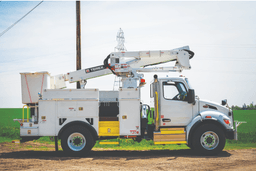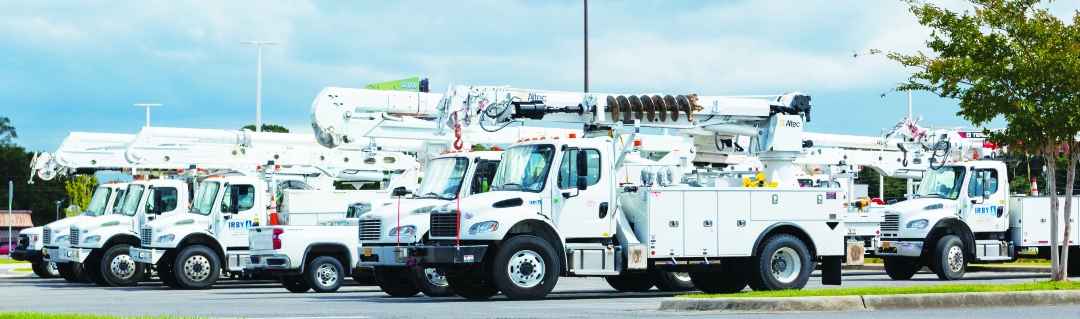
For utility fleets and construction contractors, few decisions shape long-term performance and financial stability more than whether to lease or buy equipment. Bucket trucks, excavators, cranes, service vehicles and specialty assets represent large capital investments that directly affect uptime, safety and profitability.
The lease-versus-buy question is no longer just about cash flow; it now involves equipment availability in tight markets, the pace of technology change, regulatory pressures and increasingly sophisticated financing options.
Fleet managers and contractors must weigh financial structure, resale value, maintenance responsibility and operational flexibility. The right answer depends on how the equipment will be used and how risk is best managed over its lifecycle.
According to the Equipment Leasing and Finance Association (ELFA), leasing and financing are tools that allow companies to match equipment costs with the revenue the equipment generates.
“Leasing gives businesses the ability to preserve capital and align payments with usage, while ownership may make sense for assets that remain productive well beyond the finance term,” the association noted in its guidance on capital equipment strategy.
The most immediate distinction between leasing and purchasing lies in how each affects cash flow and balance sheets:
From a financial reporting standpoint, leasing can sometimes shift expenses from capital expenditures (CapEx) to operating expenditures (OpEx), depending on accounting treatment. This can improve certain financial ratios and make budgeting more predictable.
The Associated General Contractors of America (AGC) advises contractors to assess total lifecycle cost rather than just acquisition price. “Contractors should calculate not only monthly payments but also interest, expected maintenance, downtime and residual value when determining whether leasing or purchasing produces the lowest cost per hour of operation,” the organization stated in its equipment management guidance.
The American Public Power Association (APPA) has emphasized that utilities must balance financial stewardship with operational certainty. “Public power utilities should evaluate whether owning a piece of equipment creates long-term value for their system or whether leasing provides protection against rapid technology turnover,” the association noted in its fleet and asset management resources.
Resale Value
One of the strongest arguments for purchasing equipment is the potential to recover value at resale. Heavy equipment that is well maintained can command significant prices on the secondary market, particularly during times of limited new equipment availability.
However, resale value also introduces market risk. Equipment values fluctuate with demand, fuel prices, emissions regulations and technology shifts. A machine that seems like a solid investment today may lose value rapidly if regulations or customer requirements change.
Leasing transfers much of that risk to the lessor, avoiding concerns about market conditions or obsolescence. This can be particularly important for assets subject to rapid innovation, such as hybrid or electric utility vehicles and specialized machinery.
Equipment Availability
Recent years have shown how supply chain disruptions can limit equipment availability and extend delivery times. For utilities and contractors working on fixed schedules for infrastructure upgrades or regulated service programs, waiting for new equipment is often not an option.
Leasing can provide faster access to equipment. This is especially valuable for short-term or specialized needs such as emergency response, seasonal work or temporary projects.
Buying ensures long-term availability. Once equipment is in the fleet, it can be deployed whenever needed without concerns about lease expiration or renewal. This certainty is important for mission-critical assets such as line trucks, service vans or core construction machinery.
Maintenance
Maintenance is a decisive factor in the lease-versus-buy equation. With ownership, the fleet assumes full responsibility for:
This can be advantageous for organizations with strong in-house maintenance programs. Utilities and large contractors often prefer ownership because they already operate dedicated shops and can control standards, parts inventory and downtime.
Leasing arrangements vary widely. Some are finance leases in which the lessee handles maintenance. Others are full-service leases bundling maintenance, inspections and sometimes even replacement vehicles.
Industry sources point out that full-service leasing simplifies budgeting and reduces administrative burden. It can also shift the risk of unexpected repair costs away from the fleet.
Financing Types
Both leasing and purchasing now come with a wide range of financing structures that allow fleets to tailor agreements to asset type and usage pattern.
Leasing Options
Purchasing Options
Strategic Fit
The most successful fleets use a hybrid approach by leasing some equipment and owning others.
Assets best suited for purchase typically include high-utilization equipment with a long service life, core units essential to daily operations and equipment with strong resale markets.
Assets well suited for leasing include specialized or seasonal units and equipment for short-term projects.
Utilities must also consider regulatory and public accountability factors. Capital budgets are often scrutinized, making predictable lease payments appealing. Contractors, by contrast, may prioritize flexibility and project-specific cost control.
Choosing whether to lease or buy equipment is no longer a routine accounting decision. For utility fleets and construction contractors, it is a strategic choice that affects cash flow, risk exposure, maintenance practices and operational readiness.
The optimal solution is rarely one-size-fits-all. Instead, leading fleets evaluate each asset based on utilization, expected service life, regulatory exposure and financial impact. By grounding decisions in total lifecycle cost and operational priorities, utilities and contractors can ensure that their equipment strategies support both immediate performance and long-term goals.
Mar 30, 2026


Lift & Access is part of the Catalyst Communications Network publication family.