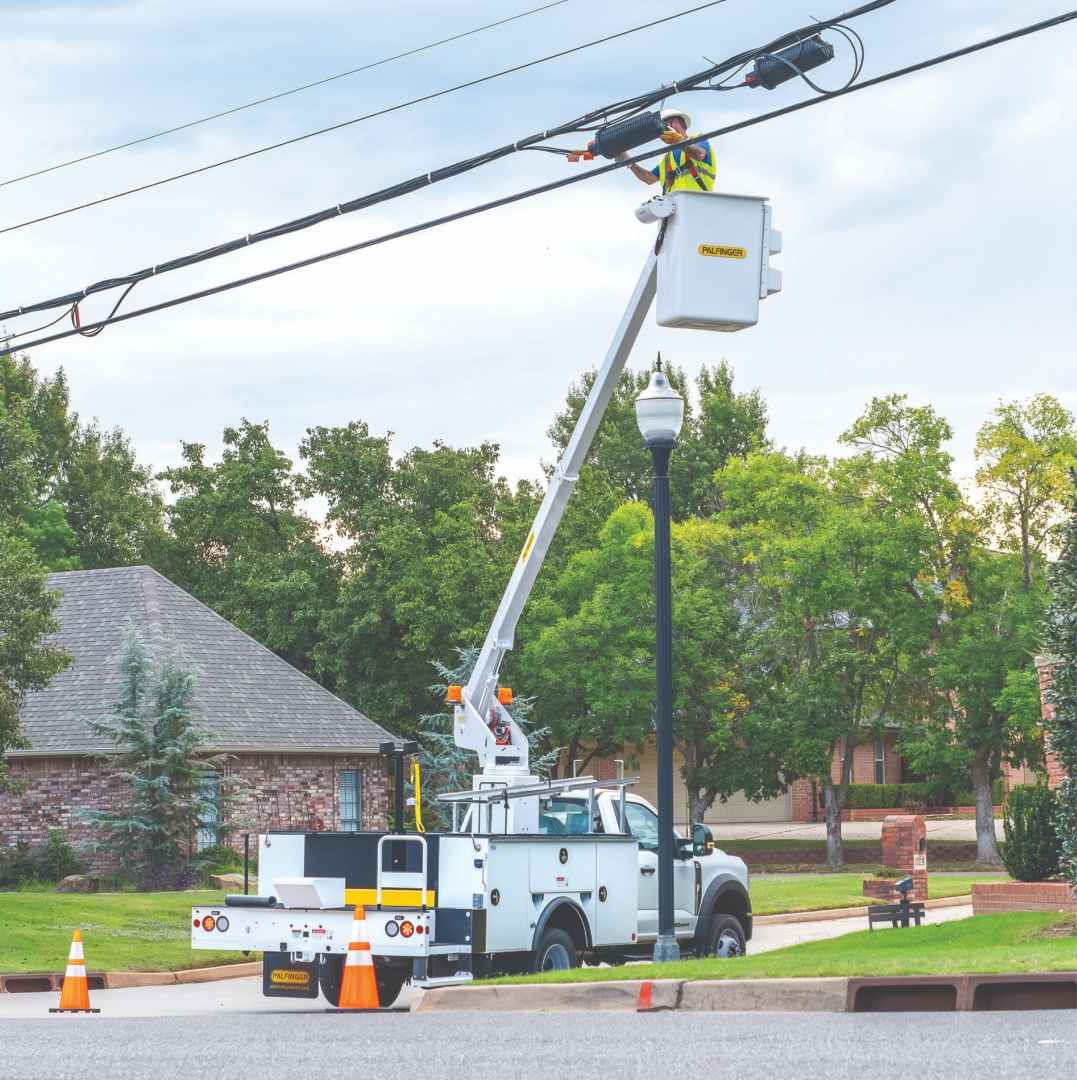
An aerial work platform may establish how high crews can reach, but the service body the platform is attached to decides how much of the job can actually travel with it.
Utility and aerial crews today have to carry more tools and replacement parts, batteries and electric equipment, rigging and safety equipment, and specialized utility gear, on top of larger and more capable aerial devices. At the same time, fleets are under pressure to preserve payload, keep trucks maneuverable, extend service life, control acquisition and operating costs, standardize equipment across fleets, and put trucks into service faster.
That creates tension between the need to carry more capability and the need to keep trucks compact, efficient, and cost-effective.
As utility fleets ask trucks to carry more, more tools, more equipment, more capability, manufacturers are rethinking the service body as more than simply a place to store tools. But the body, and the designs put into it, often start with the application.
Designed Around the Job
Manufacturers are moving away from a one-size-fits-all approach, instead transitioning to configurations to match the function. They are now designed around the crew’s tasks, equipment carried, aerial device, chassis, payload, access requirements, and fleet standardization.
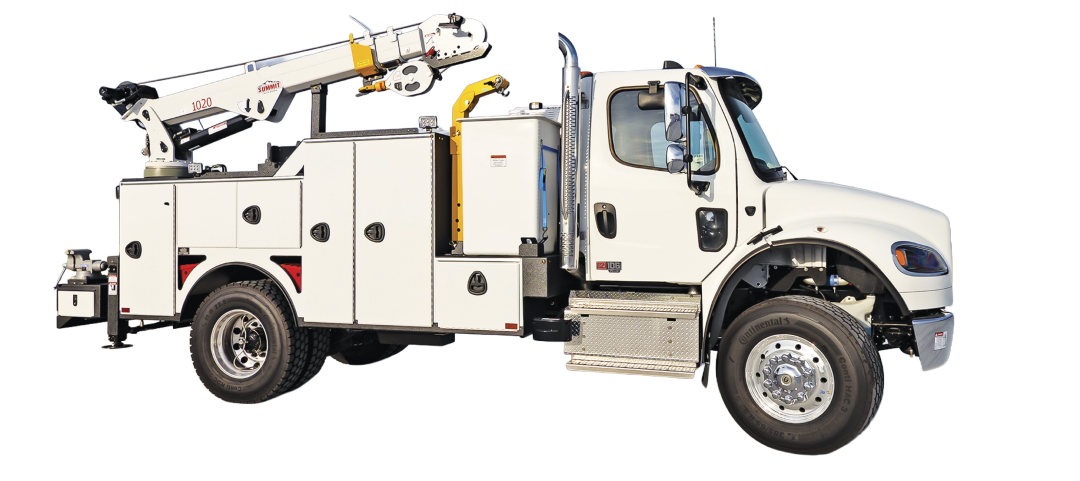
According to Summit Truck Equipment, fleet managers are focused on complete work configurations and the specific tools and equipment each job requires.
“Customers now assess what technicians carry, how often they use it, and optimal storage locations before finalizing the layout,” Sondra Kirby, Summit Truck Equipment marketing manager, stated. “This approach improves space utilization and keeps essential items accessible.”
Summit’s 7, 8, 9, and 10 Series service bodies can be configured with specialized tool compartments, ladder racks, long-pole storage, rigging baskets, and custom bumpers with enclosed storage or workbenches.
Terex Utilities, meanwhile, expressed that consistency can be key.
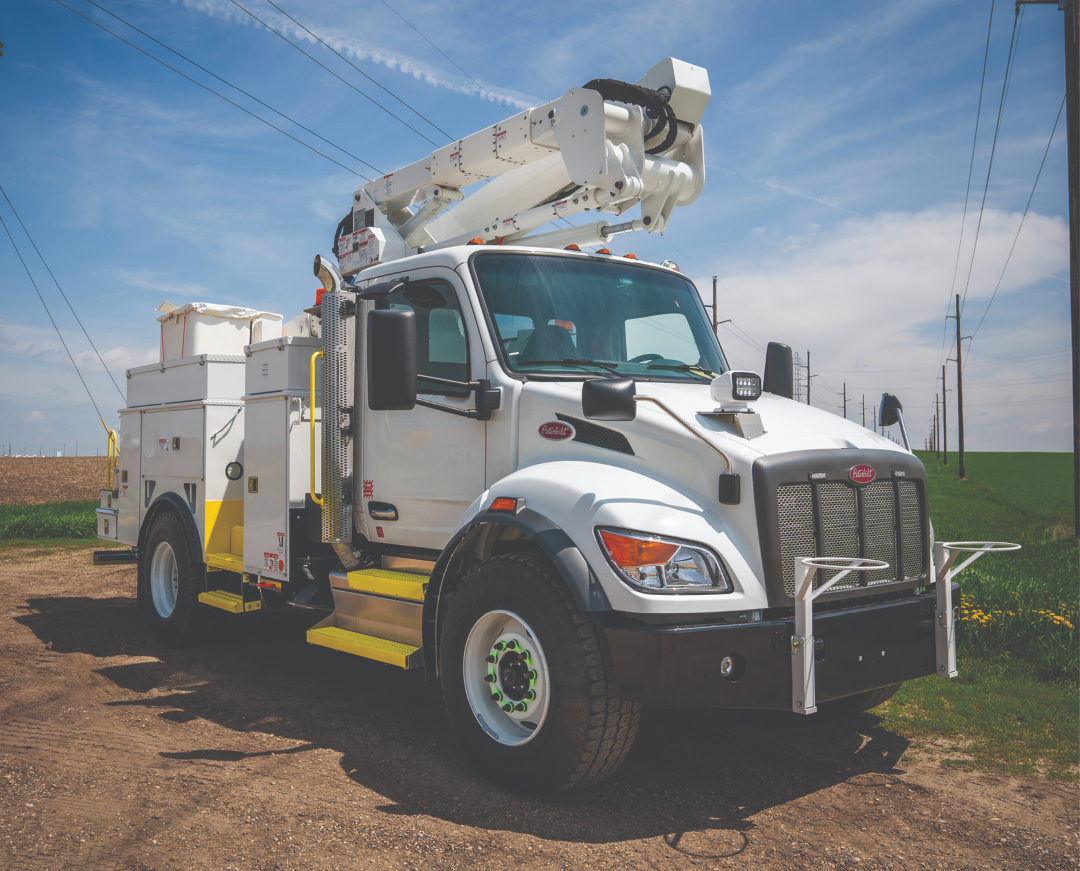
“Fleet managers want consistent body layouts, compartment configurations, and accessories,” Justin Pinkalla, Terex Utilities central region sales manager, said. “Service bodies that are custom configured to meet the needs of the crews across a specific utility simplifies maintenance, planning, and inventory management.”
Terex offers flatbed/T-body, hopper dump, and line body configurations. Line bodies are the most common for overhead line utility construction, maintenance, and service work, while hopper dump bodies support vegetation management and tree-care applications.
PALFINGER also bases the build on the application, with body length, compartment layout, payload, and accessories selected based on the work required.
“Customers are looking for greater versatility in truck packages that support multiple applications and possibly reduce the number of trucks needed to carry out the work,” said Bryan Wutzke, regional application product manager, aerial work platforms, PALFINGER North America. “For PALFINGER, material-handling aerial lifts with higher capacity and greater side reach are an important part of that solution.”
The ETC MH 40 IH, for example, combines material-handling capability with aerial reach, allowing one truck to take on applications that may have previously required multiple pieces of equipment.
More Capability, Without More Truck
Aerial devices are getting more capable, but the chassis and payload supporting them aren’t unlimited. The design challenge becomes creating a lighter, smarter body with more aerial capability, more equipment, and the same, or less, chassis weight.
“Crews are being asked to do more with equipment that is easier to maneuver and more cost-effective to operate, especially as chassis costs continue to rise,” Wutzke explained. “In response, some fleets are moving to smaller aerial units that can still support critical line maintenance and construction work with increased payload capacity, such as a material handler aerials capable of performing transformer changeouts, without needing multiple trucks or more costly larger truck configurations.”
Wutzke attributes the shift to the rising cost and complexity of emissions equipment on diesel engine chassis and EPA27 emissions requirements.
“Equipment manufacturers must be more creative with body layout, storage, accessories, and overall configuration,” Wutzke continued. “The goal is to preserve payload, functionality, and operator access without making the truck longer, which reduces maneuverability.”
“As aerial devices continue to grow in working height, reach, and capability, service body designs must do more with available chassis capacity,” Pinkalla stated. “This has increased demand for lightweight body materials and optimized structural designs that reduce body weight while maintaining durability and utility performance.”
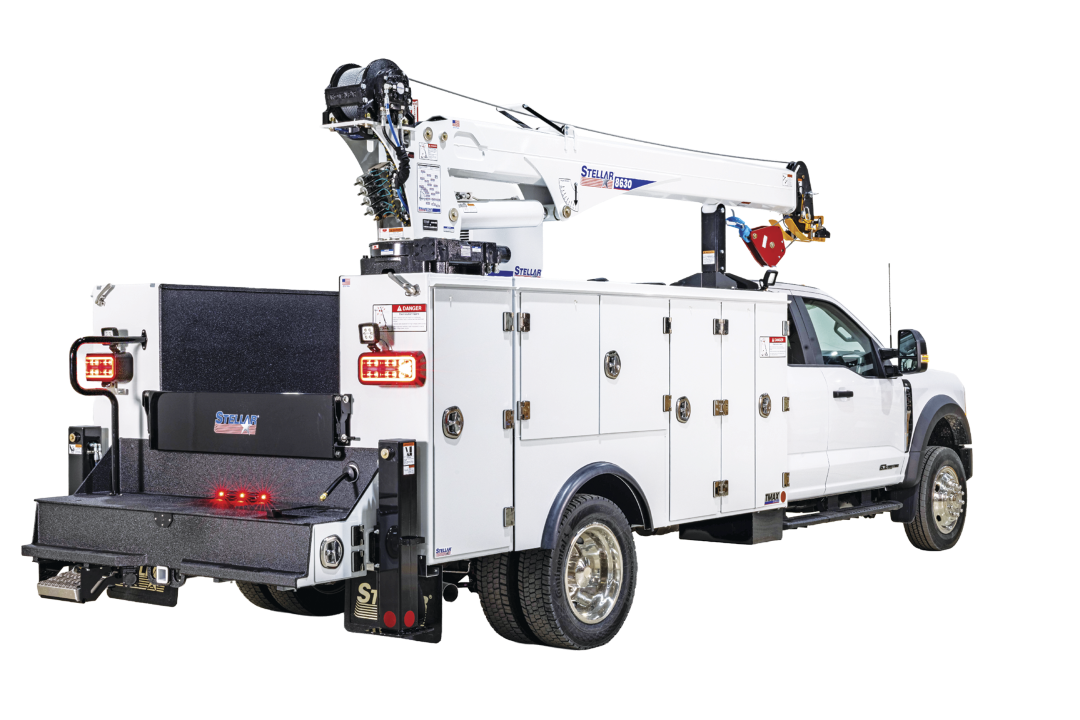
Stellar also sees payload as a key consideration, with its TMAX mechanic truck line featuring aluminum construction.
“Payload considerations are an important factor when building a mechanic truck for utility operations,” Kasey Lammer, product manager at Stellar, explained. “Choices like aluminum construction of the body or toolbox systems may allow for more capacity to carry necessary tools.”
Royal Truck Body also pointed to gross vehicle weight rating (GVWR) as a consideration for utility fleets.
“Lots of utility companies like to keep truck chassis under 26,000 GVWR so that their end users don't need a commercial driver's license and all the expenses that go along with that,” noted Marc San Paolo, supply chain manager for Royal Truck Body. “Chassis that require license endorsements are also significantly more expensive and carry a significantly higher total cost of ownership.”
As jobsites require more tools and materials and aerial devices grow in capacity, a smaller, lighter body may not seem like the obvious choice. But with limited space, body design also has to make sure the right equipment is where crews need it, when they need it.
Every Inch at Work
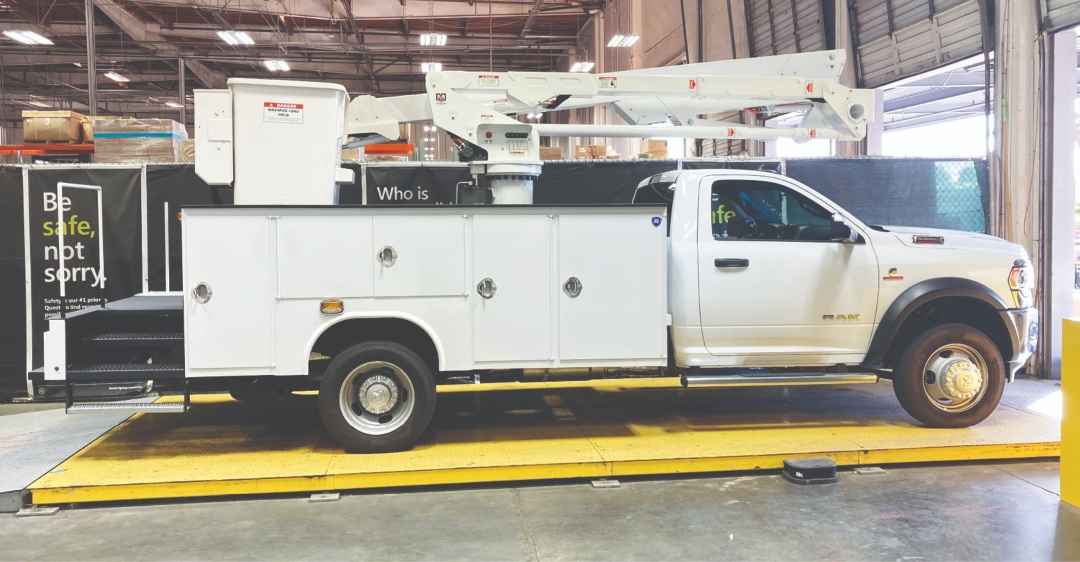
With smaller and lighter bodies, it becomes increasingly important to maximize the amount of space given and put the right equipment in the right place. Service bodies today are coming out with adjustable, modular systems, dedicated compartments, and even storage in the bumper in order to utilize the capacity.
The Stellar TMAX offers a good visual example, featuring aluminum construction, infinitely adjustable shelving, drill-free mounting rails, and additional tool storage and control panel mounting.
“Built around the needs of demanding service applications, the TMAX combines organized storage, accessible compartments, and integrated service capabilities to help crews carry the tools, parts, and equipment they need directly to the jobsite,” Lammer said.
Royal Truck Body offers 9- and 11-foot steel models with removable tote trays, hotstick storage, grip-strut steps, and Line-X cargo areas and compartments.
According to PALFINGER, making aerial trucks easier and more efficient to use in the field, as well as improving organization and equipment protection, are becoming increasingly important when improving functionality.
“For PALFINGER, that includes features such as barn-door-style compartment openings, which allow crews to access multiple compartments from one position without having to move around open doors to get to an adjacent compartment,” Wutzke explained. “It is a simple design improvement, but one that can make a meaningful difference when crews need fast access to tools, parts, or safety equipment.”
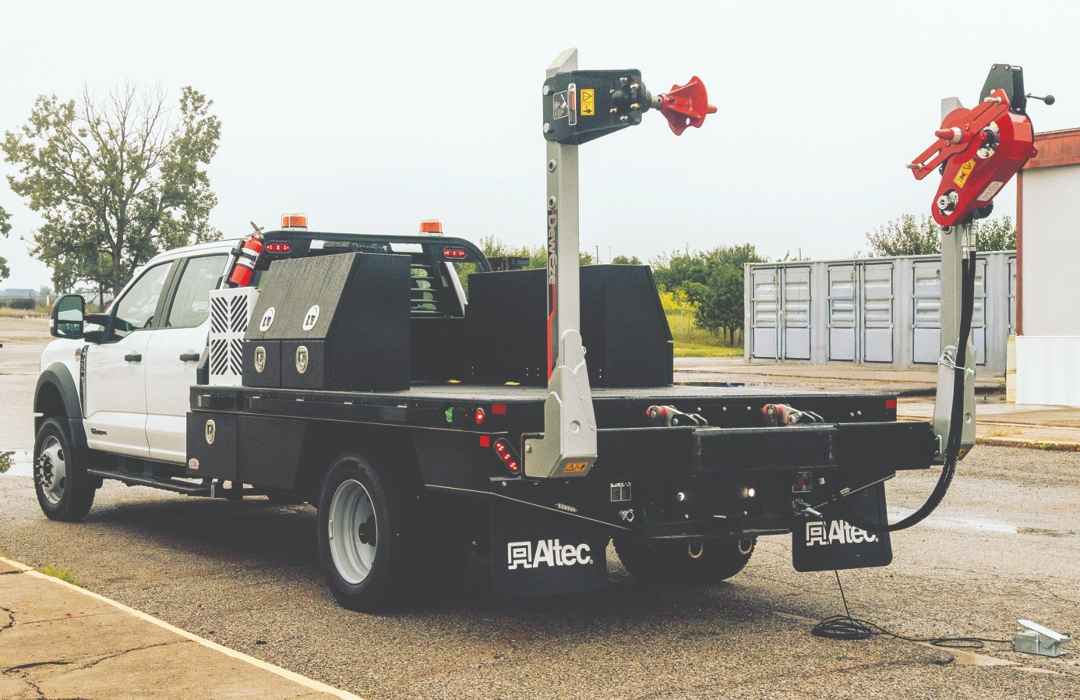
Altec takes a more specialized approach with its FBR-144D, which pairs an Altec Capstan with a Deweze XRT bed for reel transport in telecom and utility applications. The bed uses a parallel squeeze reel loading system and hydraulic drive to load, transport, take up, and payout cable or wire, while the open flatbed configuration provides additional space for equipment and materials. A wireless remote allows the operator to control the reel while positioned away from the truck, providing visibility during loading and operation.
Closer to the Operator
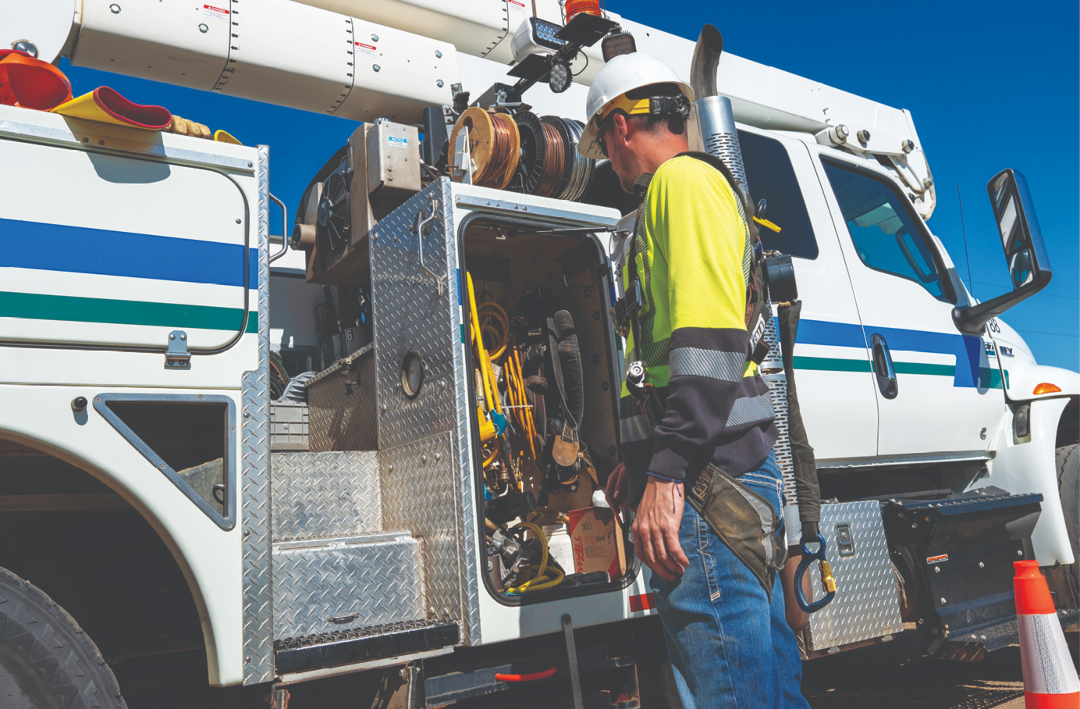
How much service bodies can carry is vital, but it’s also important to consider how the operator is going to use them. That is pushing more attention toward controls, lighting, steps, and other features designed around the users.
Aerial service bodies are seeing greater emphasis on safety and access, with features such as stair-style entrances, grip-strut steps, grab handles, anti-skid surfaces, lighting, improved ingress and egress, secure compartments, wireless controls, and improved visibility.
PALFINGER, for example, has incorporated stair-style entrances to provide three-point contact when accessing the truck bed, along with increased lighting and International Organization for Standardization (ISO) symbols on controls to make operation more intuitive.
Royal Truck Body uses grip-strut rung steps and Line-X throughout its cargo areas and compartments, while work platforms include notch-outs to accommodate outriggers.
Technology is also bringing more truck functions within the operator’s reach. Summit’s ASE Phase 5 integrates crane, body, and chassis functions through a main touchscreen, in-cab panel, and wireless remote. Operators can control outriggers remotely, use automated setup and teardown functions, and access diagnostics and maintenance information.
Summit Design Engineer, Christian Glascock, explained, the remote “allows the operator more functions at their fingertips than previously, reducing the need to return to the truck to turn on each function.”
Connected, Adaptable Trucks
Features are useful for operators, fleet managers, and beyond, but adding more elements isn’t the goal. Instead, the focus is on making trucks easier to configure, monitor, maintain, and adapt.
Stellar also sees technology integration becoming more important, including space to house, charge, and operate battery-powered equipment, along with wireless crane controls and Crane Dynamics Technology (CDT) for more precise operation away from the load.
Connectivity is moving into compartment security as well. Royal Truck Body pointed to electric locking hardware, notifications when compartments are unlocked, and ignition-codeable locks.
Terex sees connectivity playing a larger role across the service body and truck. “In the coming years we would expect to see more creature comforts for service bodies,” Pinkalla said. “Features such as electronic compartment locking systems, automatic compartment lighting, vehicle connectivity, and integrated fleet monitoring technologies are becoming more attractive to create a more connected, automated, and productive utility truck.”
Altec, meanwhile, expects continued interest in modular design and alternative materials.
“I expect there to be more of an effort to further understand how other material types could meet customers’ needs and expectations in both performance and overall price,” Katherine Niebuhr, business development manager, work trucks at Altec, explained.
“Structural improvements, new materials, improved paint, and anti-corrosion materials are all in-demand features that extend service bodies’ lives in the field,” Niebuhr continued.
These trends together point toward service bodies that are not only more connected, but also more adaptable over the life of the truck. As applications change and fleets continue to ask more from each truck, that flexibility may be just as important as the equipment installed on the body itself.
Part of a Complete System
As service body trucks are asked to do more, carry more, lift more, it’s important to consider the body, aerial device, and chassis as partners. They have to increasingly be viewed as a single work system, with payload, storage, access, controls, and application requirements influencing each other.
And the goal isn’t to simply load the truck up with as much equipment as possible. The truck should be configured so the equipment, crew, and application all work in tandem from the start.
Nov 04, 2026
associate editor, Catalyst Communications Network

Lift & Access is part of the Catalyst Communications Network publication family.