For utility fleets, operational efficiency increasingly depends on the ability to manage large amounts of information, eliminate repetitive work and provide employees with quick access to trusted knowledge. During EUFMC 2026, that discussion incorporated the growing use of Artificial Intelligence (AI), automation and digital tools that are reshaping utility fleet operations.
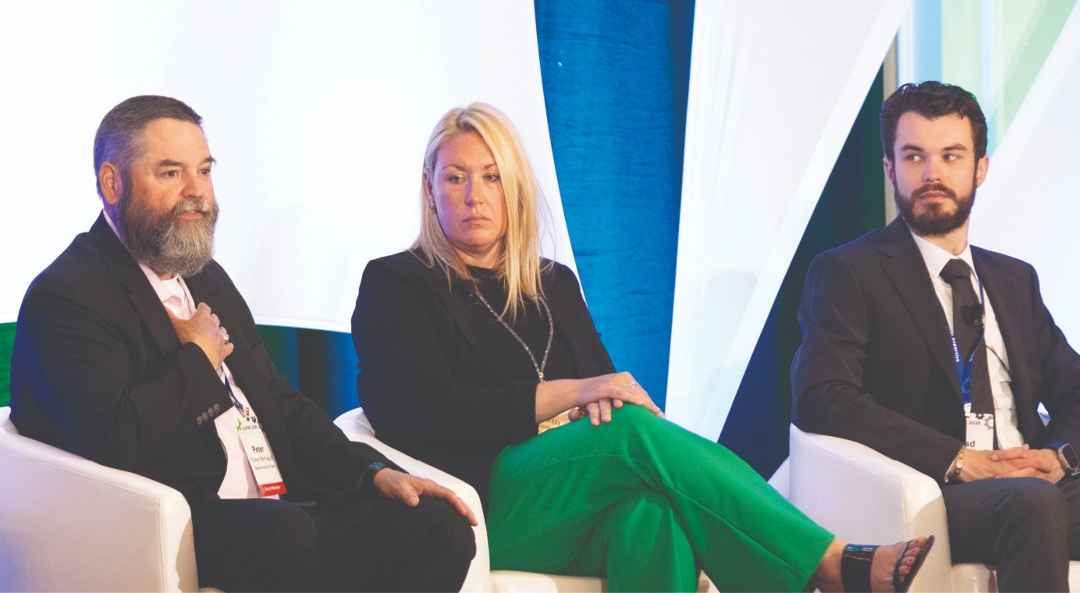
The subject of using AI to drive smarter processes was addressed in two sessions during the conference. Driving Efficiency and Innovation, moderated by Peter Michaud, fleet manager at NB Power and an EUFMC director, featured presenters Beth Daiber, senior manager of fleet at Ameren Illinois Company, and Vladimir Ostoici, mobile fleet analyst at ENMAX. Worksite Risk Mitigation & Hazard Awareness was presented by Josh McDonald, senior manager, Fleet Management at Entergy.
Together, the presentations demonstrated how utilities are applying AI and complementary technologies to improve business processes, strengthen decision-making, increase efficiency and advance workplace safety.
Digital Innovation in Fleet Business Processes
Sharing a practical example of how utilities can leverage automation and AI-enabled tools, Daiber highlighted the efforts at Ameren Illinois to modernize payment processes for approximately 3,800 fleet assets to boost administrative efficiency and provide real-time access to invoice data. The move to an in-house payment model also enabled improved oversight of maintenance expenditures.
Daiber emphasized that the in-house payment model creates stronger internal controls over policies, procedures and systems that ensure reliable financial reporting. “Without those controls, fleets face risks, including financial loss, increased fraud exposure, inaccurate reporting and audit deficiencies,” she said. “Improved access to invoice information now allows supervisors to monitor financial activity and identify trends or anomalies more effectively.”
A major component of the Ameren Illinois modernization effort was the use of Robotic Process Automation (RPA), software that employs virtual robots to automate repetitive, rules-based tasks. Ameren’s fleet team partnered with the utility’s Center for Automation and six vendors to implement automated payment processes. The system incorporates Optical Character Recognition (OCR) technology and automates data entry into payment and fleet management systems. In 2025, the process handled 16,595 invoices.
“The results illustrate the value of automation in utility fleet operations,” Daiber said. “The transition from manual data entry to automated workflows returned approximately 2,800 labor hours while delivering cost savings, improved accuracy, enhanced scalability and increased employee satisfaction. The initiative demonstrates that before organizations can fully capitalize on AI, they often benefit from first identifying repetitive, rules-based activities that can be automated and standardized.”
Daiber also pointed out that successful digital transformation is not solely about technology. It also requires the development of oversight processes and controls that ensure information is accurate, transparent and aligned with organizational policies.
Knowledge and Decision-Making
At ENMAX, Ostoici reported, AI is being applied to support employees and accelerate decision-making throughout fleet operations. His presentation showcased several solutions designed to improve access to information, reduce administrative burdens and enhance collaboration.
One example is ENMAX’s SharePoint AI Agent, described as a digital front door to fleet knowledge. “The tool reduces repetitive questions directed to subject matter experts by answering common inquiries using approved content,” Ostoici explained. “Rather than searching through multiple folders and repositories, employees can access standard operating procedures, policies, standards, vendor documentation and decision records from a single source.
“The AI agent also provides summaries and insights from large collections of documents, helping employees quickly understand complex packages, procedures and reference materials,” Ostoici continued. “Importantly, the system is permission-safe, operating within the Microsoft 365 security framework and only accessing information designated as available to the user.”
ENMAX is also using AI to improve meeting productivity through a tool called Facilitator. The technology creates real-time meeting notes that participants can co-author and automatically captures decisions and open questions. Additional capabilities include in-meeting question-and-answer support, reminders when individuals are referenced but not present, agenda detection, goal prompting and timed topic management.
“By documenting action items as discussions occur, the tool helps ensure that important fleet-related actions are not lost after meetings conclude,” Ostoici said. “These features help teams stay focused while improving accountability and follow-through.”
Another key AI application at ENMAX is Copilot Chat, which Ostoici described as a “thinking partner” for problem framing and analysis. Rather than replacing human judgment, the tool helps users clarify questions, structure planning and research efforts and organize early-stage thinking before moving into documents, models or workflows.
“It breaks complex fleet decisions into clear options, risks and assumptions, helping employees make more informed decisions,” Ostoici related. “The system also improves decision quality by helping users challenge assumptions, refine prompts and validate thinking against available information sources.”
Taken together, Ameren Illinois’s and ENMAX’s examples illustrate a growing trend in utility fleet management: AI is becoming less of a standalone technology and more of an integrated workplace assistant. From knowledge management and document retrieval to meeting support and strategic analysis, it is helping employees spend less time searching for information and more time applying it effectively.
Safety Briefings and Hazard Awareness
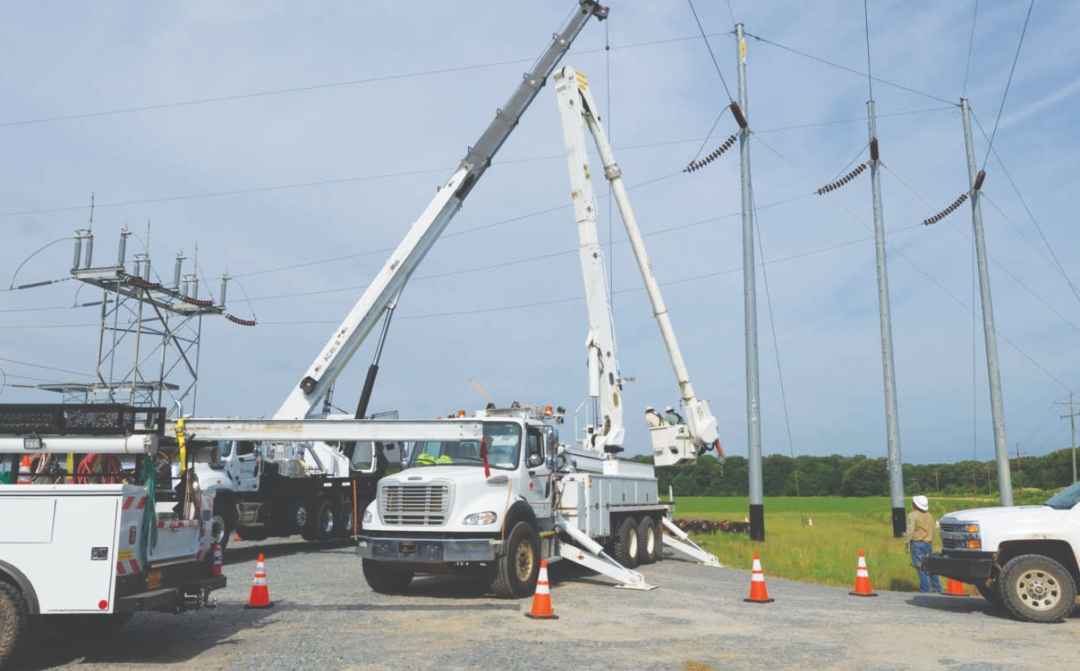
McDonald’s presentation focused on using AI-supported technologies to improve hazard recognition, job hazard assessments (JHAs) and workplace safety conversations across Entergy’s fleet operations. The utility’s fleet operation, which serves customers across Arkansas, Louisiana, Mississippi and Texas, includes more than 7,000 assets.
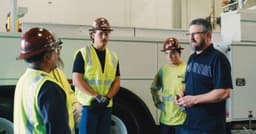
“Within such a large operation, maintaining consistent safety practices requires tools that support communication, documentation and continuous learning,” McDonald said. “Central to our approach are tailboards and JHAs, which provide pre-job safety alignment before work begins. These activities define job scope, establish roles, identify hazards and critical risks, confirm required personal protective equipment and reinforce communication and stop-work authority.”
Traditionally, these assessments were captured through paper forms, McDonald noted. “The challenges associated with paper-based JHAs include that they require extensive writing while often limiting meaningful group discussion about safety risks,” he added. “On many jobsites, one employee completes the form, creating uncertainty about whether all crew members share the same understanding of the work scope, assigned roles and safety concerns.”
To address those issues, Entergy implemented SmartTagIt, a mobile application available on iOS and Android devices. The platform functions as a digital JHA form and a method for recording tailboard conversations. McDonald described it as a simple and easy-to-use application that allows workers to share information, coach one another and mitigate potential hazards.
According to McDonald, SmartTagIt helps strengthen both the auditory and visual learning process, enabling employees to gain greater confidence in the work being performed. “The application was designed to improve hazard recognition and daily safety conversations while providing leaders with a tool for coaching and positive recognition,” he said. “It also creates an easier way to share information when additional employees arrive at a jobsite.”
Another major goal is consistency. SmartTagIt provides what McDonald called a “one way approach” for conducting JHAs and tailboards throughout Power Delivery operations. “It reduces paperwork by allowing employees to focus on meaningful conversations rather than extensive documentation,” he related. “Features such as talk-to-text functionality make the electronic process faster and easier while preserving important information.
“Strong leadership support also played an important role in SmartTagIt implementation,” McDonald continued. “Leaders monitor JHAs and safety conversations, providing both positive and constructive feedback to improve hazard recognition, planning and communication.”
The newest development at Entergy is the addition of AI-powered insights through the SmartTagIt platform’s “Ask a Question” feature. Users can enter natural-language questions and receive immediate answers generated from historical JHA data.
“That capability helps identify trends, assess performance and gain context from existing safety records,” McDonald explained. “Example questions include identifying which region improved the most during a given week, determining who completed the most JHAs or discovering which hazards appeared most frequently during a month.
“The AI functionality also summarizes individual and workgroup JHAs, highlights patterns that may indicate emerging risks and supports supervisors preparing targeted coaching discussions,” McDonald continued. “Enhanced trend visualizations, improved filtering, streamlined dashboards and drill-down capabilities help identify potential concerns earlier and reinforce quality safety habits over time.”
For McDonald, the value of AI lies not in replacing safety conversations but in strengthening them. By analyzing historical data, identifying patterns and making information easier to access, AI enables supervisors and crews to have more informed discussions about risk. The result is a stronger foundation for hazard awareness, coaching effectiveness and continuous improvement in workplace safety.
Going Forward
The EUFMC sessions demonstrated that AI’s role in utility fleet management extends well beyond experimentation. Automation and digital controls are transforming administrative processes, improving financial oversight and returning thousands of labor hours.
AI is now becoming a trusted knowledge resource and decision-support partner. AI-enabled tools are also strengthening safety conversations, enhancing hazard recognition and providing meaningful insights from workforce data.
A common theme throughout is clear: when combined with strong processes and engaged leadership, AI can help utility fleets operate more efficiently, make better decisions and create safer work environments.
Oct 16, 2026
Lift & Access is part of the Catalyst Communications Network publication family.